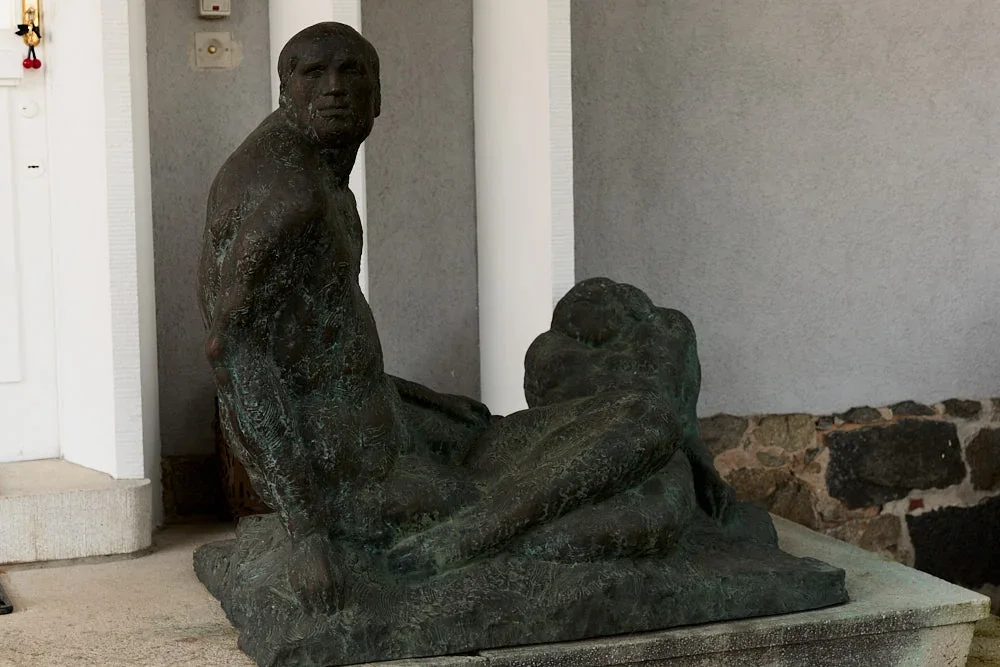
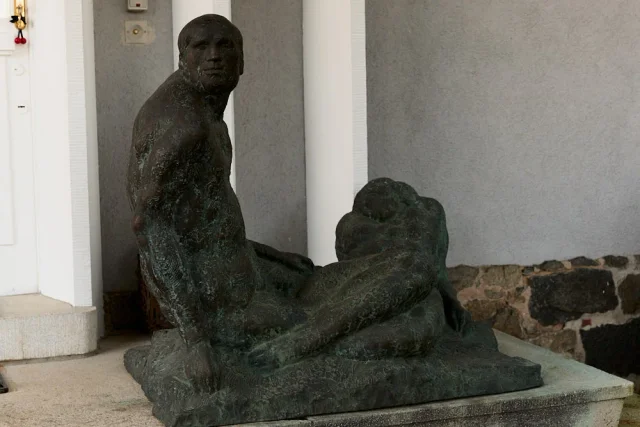
About the Artist Wieland Förster
Wieland Förster (1930–2023) is one of the significant German sculptors of the second half of the twentieth century. His work returns insistently to the human being – often to the vulnerable, suffering body. This concern is inseparable from his biography: as a fifteen-year-old he witnessed the bombing of Dresden on 13 February 1945, and from 1946 to 1950 he was wrongfully imprisoned in a Soviet special camp. On account of his humanist, system-critical stance, the GDR imposed an exhibition and sales ban on him from 1968 to 1973; in 1974 he became a member of the Akademie der Künste, later its vice-president, and in 1985 he received a professorship. In bronze and stone he created figures of great intensity, among them „Der große trauernde Mann" (The Great Mourning Man, 1993) for the victims of the Dresden bombing; his works mark public sites from the Glienicke Bridge to Hamburg's HafenCity. Förster also worked as a draughtsman, printmaker and writer.