Artists
Get to know the creative minds behind the artworks
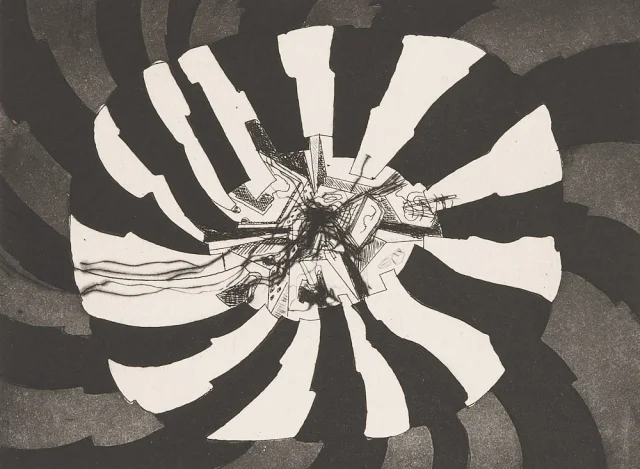
ACKERMANN, Franz
Franz Ackermann (b. 1963 in Neumarkt-Sankt Veit) translates the experience of modern travel into an unmistakable visual language. It begins with his "Mental Maps" — small-format watercolours and gouaches he has recorded on journeys around the globe since 1991. In large-scale paintings and expansive installations these condense into luminous, high-energy worlds where cartographic structures, architectural views and ornamental patterns merge. Ackermann studied at the academies in Munich and Hamburg, among others under Bernhard Blume, and has taught as professor of painting in Karlsruhe since 2001. His works are on display in major international museums and collections and rank among the most instantly recognisable positions in contemporary German painting.
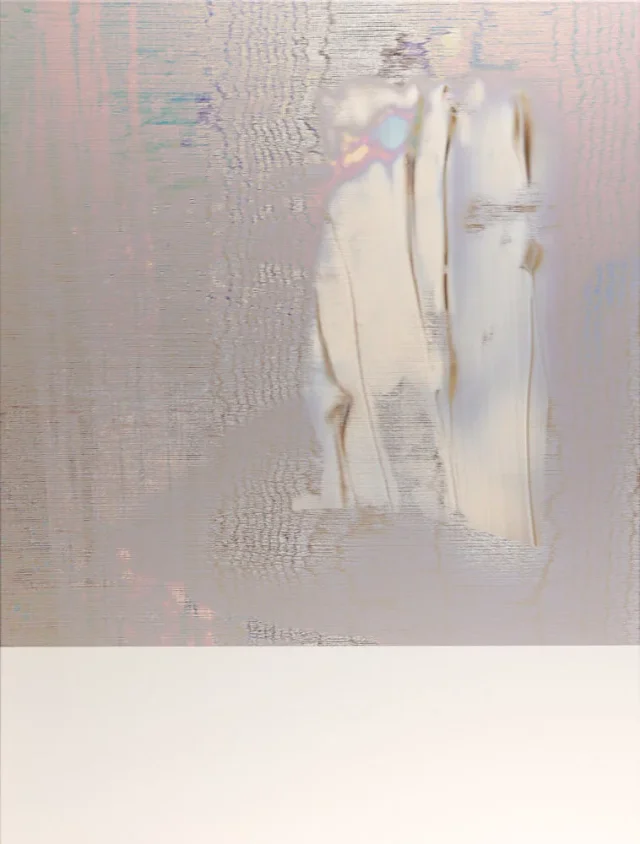
AHMED, Taslima
Taslima Ahmed, born in Liverpool and now based in Berlin, joins digital technology with the tradition of painting. Her works are produced using Photoshop and 3-D UV printing on synthetic linen, with pigments built up in layers into flat reliefs that carry a pseudo-impasto effect. In this way she examines the relationship between human and computer as the very material of artistic production. Alongside her painting, Ahmed also works as a writer.
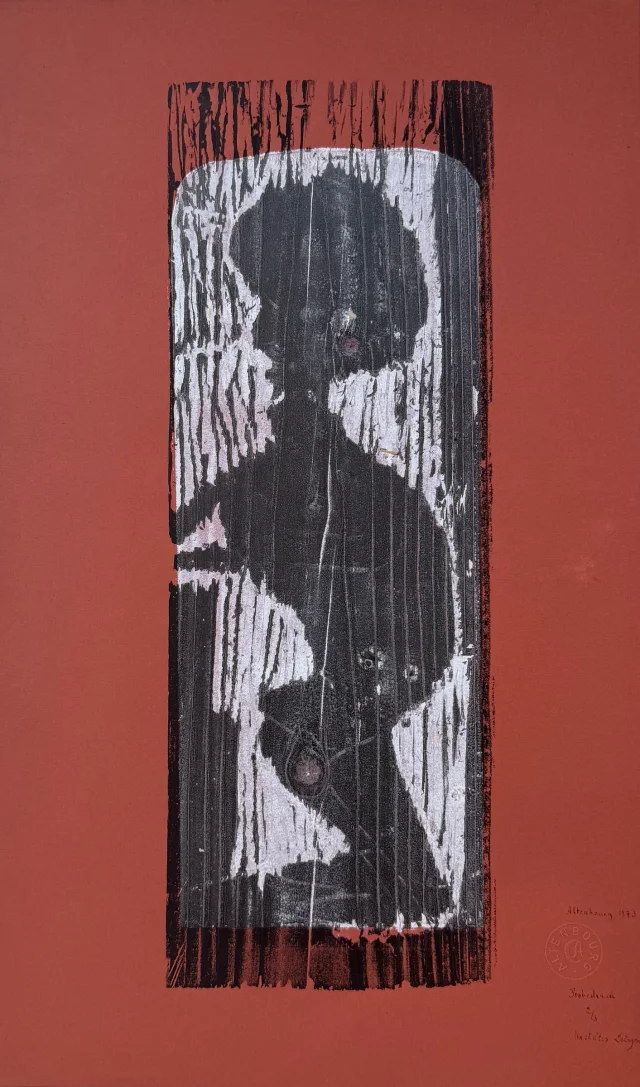
ALTENBOURG, Gerhard
Gerhard Altenbourg (1926–1989), born Gerhard Ströch, was a German draftsman, printmaker, and painter, and is regarded as one of the most important German artists of the postwar period. From 1948 to 1950, he studied at the Academy of Visual Arts Leipzig. In 1949, he adopted the artist's name "Altenbourg" in reference to his hometown of Altenburg.Altenbourg's work is distinguished by a unique, poetic visual language that merges figuration and abstraction. His delicate drawings, etchings, and lithographs, as well as his sensitive watercolors and paintings, explore themes of nature, humanity, and metamorphosis. Inspired by Romanticism, Symbolism, and Classical Modernism, he developed a highly distinctive artistic style of profound emotional and spiritual depth.Although Altenbourg lived and worked in the former East Germany (GDR), his art remained largely independent of official cultural policy. He gained international recognition through exhibitionsWest-Germany and the United States. Today, his works are held in major public and private collections and are regarded as outstanding examples of 20th-century German art.
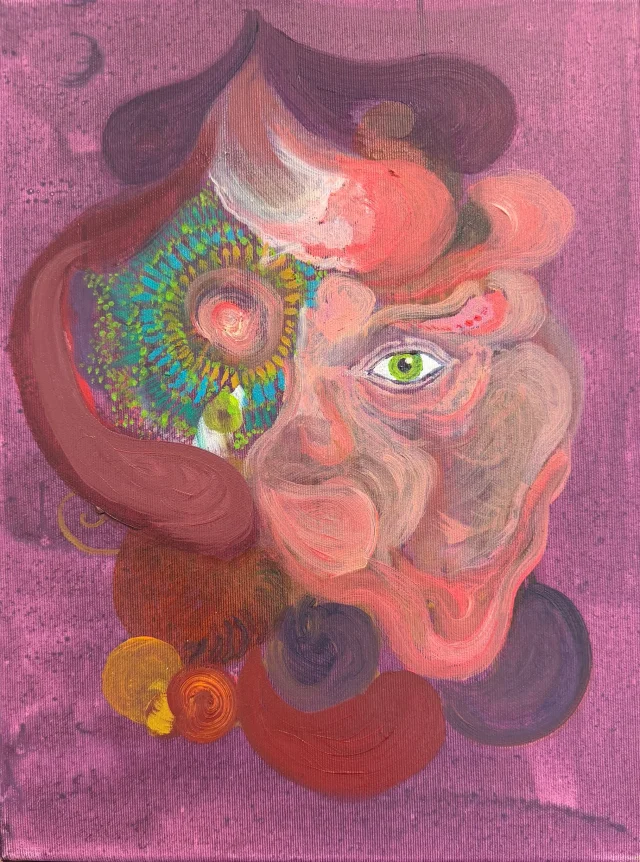
AUER, Abel
Abel Auer (b. 1974 in Munich) is one of the most singular voices in contemporary painting. His visual language brings together the painterly strategies of the classical avant-garde and the do-it-yourself spirit of 1980s punk and skateboard culture. Landscape sits at its centre, which he develops into dreamlike, often visionary worlds of peculiar colour. Raised in Stuttgart, Auer studied at the Hochschule für bildende Künste in Hamburg, where he co-founded the artist group Akademie Isotrop and has himself taught as a professor since 2019. Beyond painting, he writes on art and music, designs record covers and occasionally curates. His work is shown above all in England and Belgium.
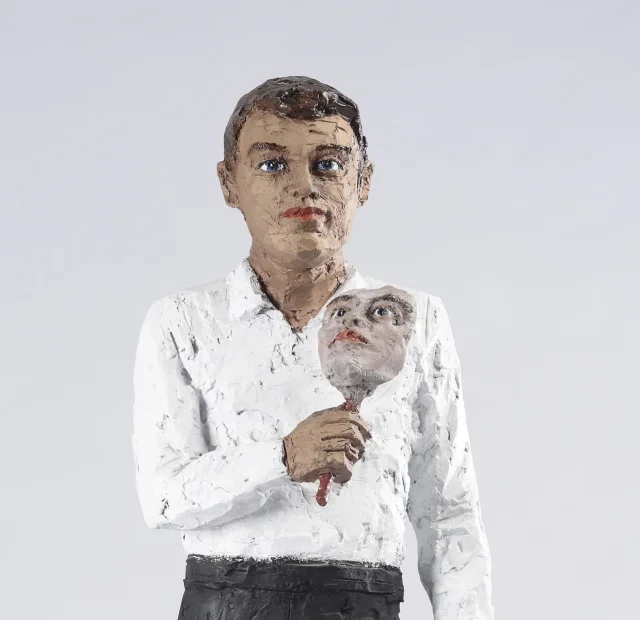
BALKENHOL, Stephan
Stephan Balkenhol (b. 1957 in Fritzlar) is one of the best-known German sculptors working today. He became famous for his painted figures carved from a single block of wood – mostly ordinary people rather than heroes or idols, often in a white shirt and dark trousers. With hammer, chisel and chainsaw, Balkenhol releases his figures from soft woods such as poplar or wawa; the visible traces of working and the sparing colour give them a presence that is at once archaic and everyday. Balkenhol studied at the Hochschule für bildende Künste in Hamburg under Ulrich Rückriem and has taught as a professor at the State Academy of Fine Arts in Karlsruhe since 1992. His work is held in major museums internationally and in public space.
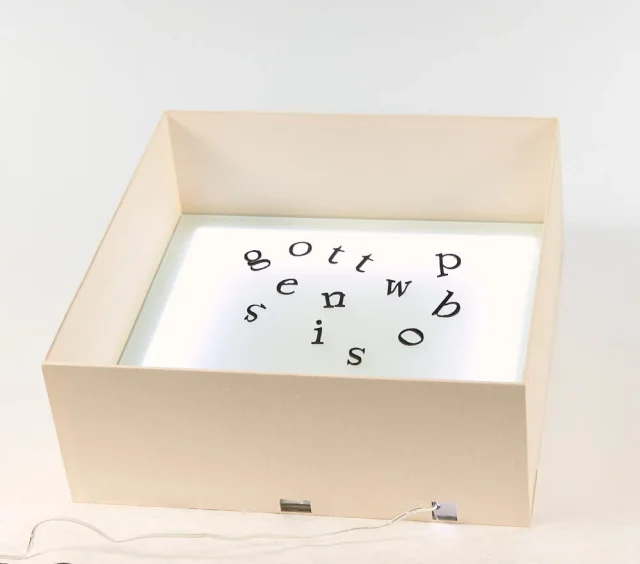
BARBA, Rosa
Rosa Barba (*1972 in Agrigento, Italy) is an Italian artist and filmmaker who lives and works in Berlin. Her films move between experimental documentary and fictional narrative. Starting from the medium of film, she develops installations and sculptural works. These interventions explore how film articulates space, and in doing so establish a new relationship between the artwork and the viewer.Rosa Barba studied at the Academy of Media Arts Cologne and has been awarded, among others, the Calder Prize (2020). She participated in the 53rd and 56th Venice Biennale. Her works have been exhibited at institutions like Tate Modern in London and the Museo Nacional Centro de Arte Reina Sofía in Madrid. In 2026, she had a solo exhibition at the Calouste Gulbenkian Museum in Lisbon. At the Museum of Fine Arts Leipzig, the large-scale spatial installation "Under the Canopy" is currently on view.
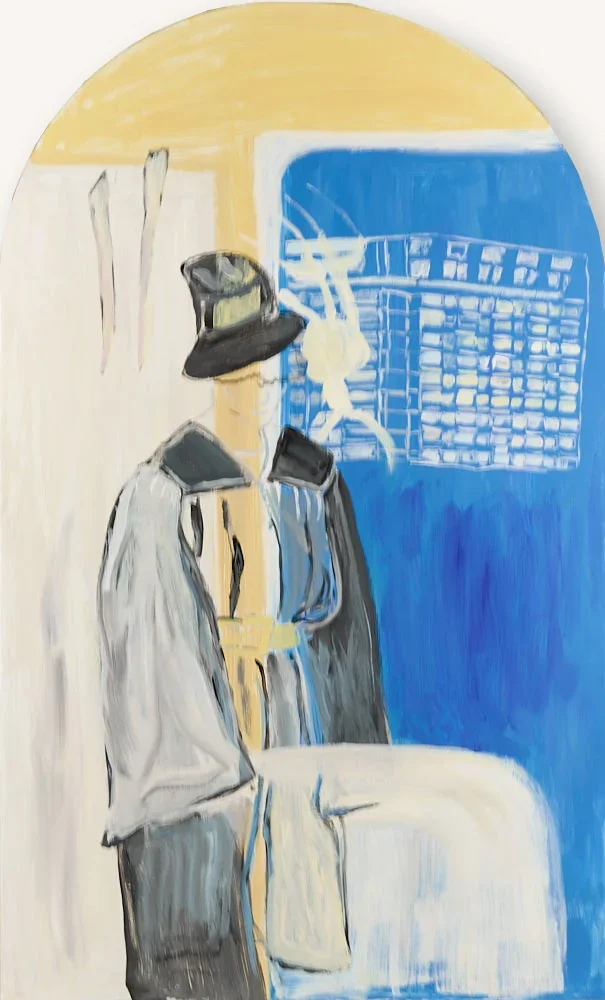
BAUMGARTNER, Maximiliane
Maximiliane Baumgartner (b. 1986 in Lindenberg im Allgäu) combines painting with a community-minded, pedagogical practice. Against the backdrop of (counter-)public spheres, she explores the relationship between art, education and urban space — not least through "Der Fahrende Raum," an art and action space she initiated and programmed in Munich from 2015 to 2019. Her pictures frequently break away from the rectangular panel, favouring polygonal forms informed by mural painting and graphic design. Baumgartner studied from 2006 to 2012 at the Academy of Fine Arts in Munich under Stephan Dillemuth, and lives and works in the city.
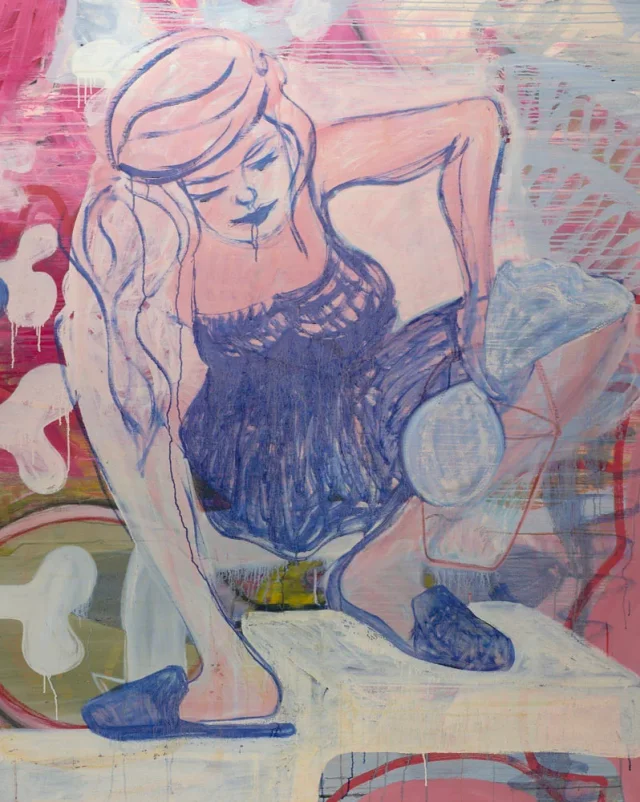
BISCHOF, Kamilla
Female figures, animals and mythical creatures populate the large-format canvases of Kamilla Bischof (b. 1986 in Graz), placed in everyday situations and surrounded by everyday objects. In tandem to this Bischof interrogates these scenarios in texts that unfold simultaneously and in response to the canvases. Bischof studied from 2009 to 2015 at the Academy of Fine Arts in Vienna and at the School of Artistic Photography in Vienna. She lives and works in Berlin.
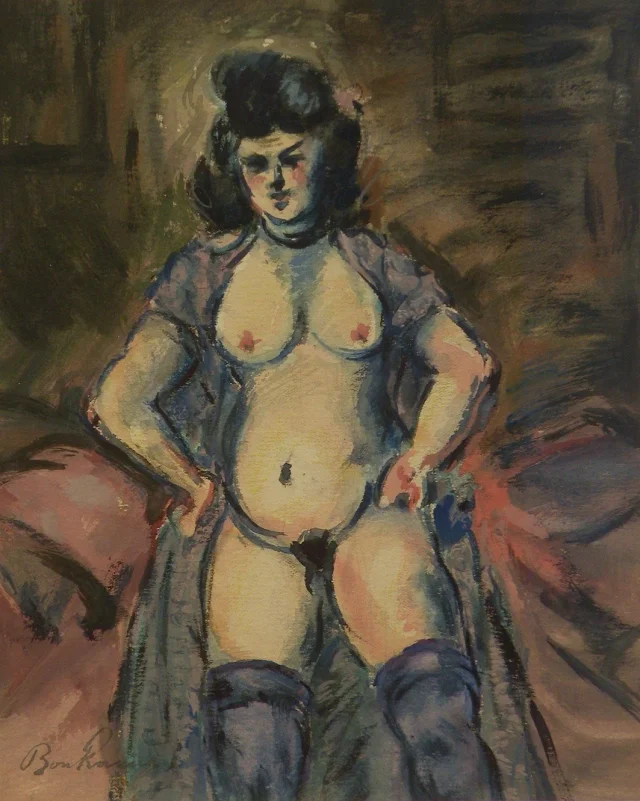
BONHOMME, Leon
Léon Bonhomme (1870–1924) was a French painter active during the late nineteenth and early twentieth centuries. Born in Saint-Denis (or, according to some sources, Paris), he studied at the École des Beaux-Arts in Paris under Jean-Jacques Henner before joining the studio of Gustave Moreau, where he became acquainted with Georges Rouault. Bonhomme received an honorable mention at the Salon des Artistes Français in 1897.His work focused primarily on portraits, female nudes, and genre scenes, often executed in oil, watercolor, and drawing. He also produced monumental decorative paintings, including allegorical murals for the Hôtel de Ville in Saint-Denis. Stylistically, his art combines academic training with Symbolist influences and reflects the artistic climate of fin-de-siècle Paris.Alongside his artistic practice, Bonhomme worked as a drawing teacher in Saint-Denis. He died in 1924, leaving behind a modest but distinctive body of work that is represented in museum collections and continues to appear in the art market.
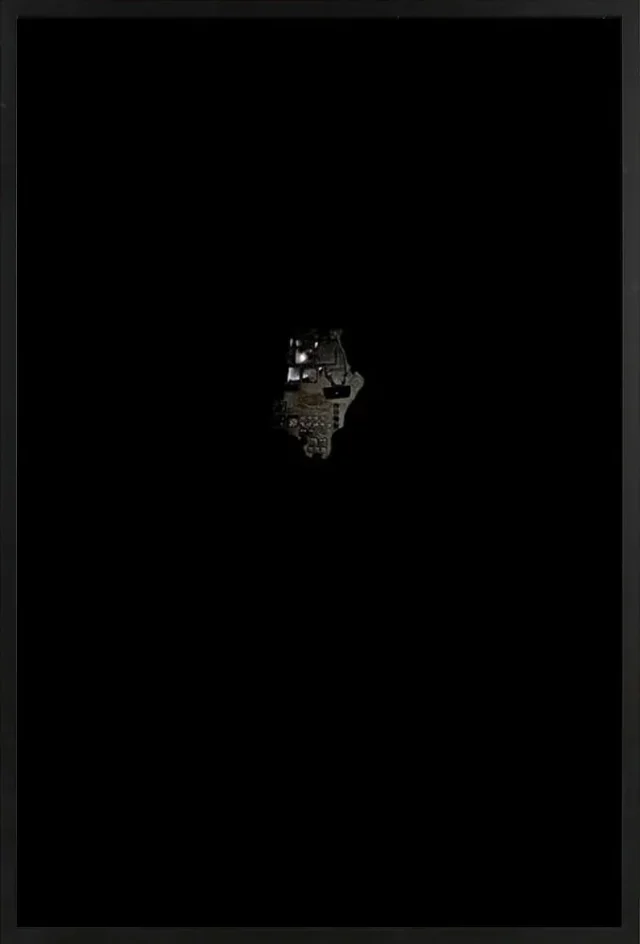
BRAZELTON IV, Cudelice
The work of Cudelice Brazelton IV (b. 1991 in Dallas) moves between painting, sculpture, assemblage and collage. From fabric, leather, metal, cardboard and cosmetic elements he builds three-dimensional pieces that address identity, abstraction and the physicality of place, unsettling the boundaries between material, space and viewer. Two biographical sources run through the work: his earlier years as a steelworker in the American Midwest — a trade inherited from his father — and the imagery of cosmetics, familiar from his mother's hair salon. Brazelton studied at the Städelschule in Frankfurt am Main (2017–2021) and at the Skowhegan School of Painting & Sculpture; he lives and works in Frankfurt am Main.
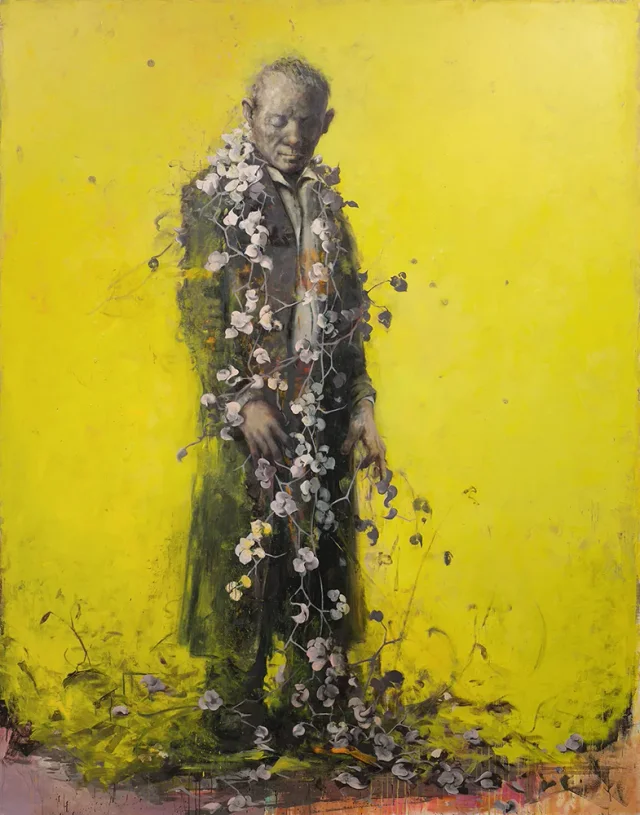
BURGERT, Jonas
The monumental paintings of Jonas Burgert (b. 1969 in Berlin) unfold scenes in which the grotesque, the dreamlike and the existential converge. Luminous colours laid over a dusky grey are populated by archaic figures, symbols and signs. His sometimes vast tableaux cannot be taken in at a single glance; they demand close and repeated looking. Burgert studied at the Universität der Künste in Berlin as a master student of Dieter Hacker and still works today in a sprawling studio in Berlin-Weißensee. Since his breakthrough in the mid-2000s he has counted among the most sought-after figurative painters of his generation internationally.
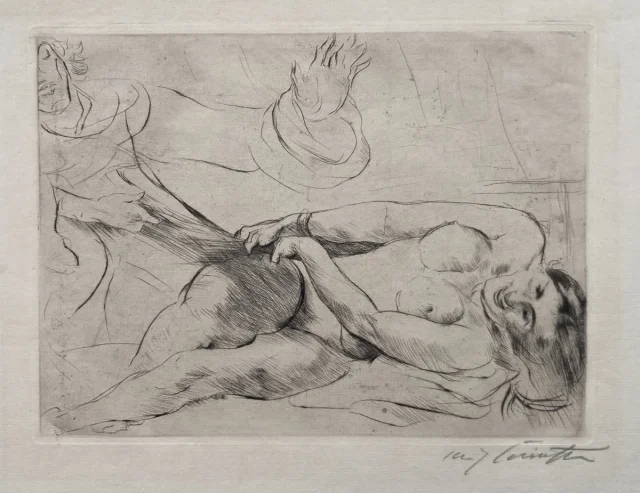
CORINTH, Lovis
Lovis Corinth (1858–1925) ranks among the most important German painters at the turn of the 20th century. His work bridges Impressionism and Expressionism in a powerful, sensuous style of painting with richly impastoed brushwork – in portraits, nudes, still lifes as well as mythological and religious scenes. Born in Tapiau, East Prussia, Corinth studied at the academies in Königsberg and Munich and at the Académie Julian in Paris. In 1901 he moved to Berlin, joined the Secession and later became its president. After a stroke in 1911 his painting gained expressive freedom; the late Walchensee landscapes and self-portraits are considered the pinnacle of his oeuvre. His works are represented in major museums worldwide.
CRAGG, Tony
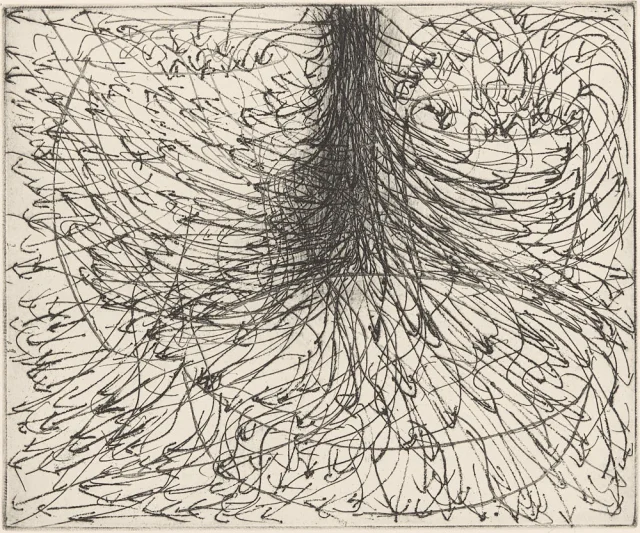
Tony Cragg (b. 1949 in Liverpool) is one of the most important contemporary sculptors. His oeuvre is defined by a relentless investigation of material — from early pieces assembled out of found plastic to the flowing, twisting forms he draws from bronze, steel, wood and fibreglass. In series such as the "Rational Beings" and the "Early Forms," he makes solid matter appear organic and dynamic, pushing the boundaries of classical sculpture. After working as a laboratory technician, Cragg studied at the Royal College of Art in London and settled in Wuppertal in 1977, where he still lives and works. In 1988 he represented Britain at the Venice Biennale and received the Turner Prize the same year; for many years he taught as professor and rector at the Düsseldorf Art Academy. His works are on display in the world's most prestigious museums.
CURIO, Sabine
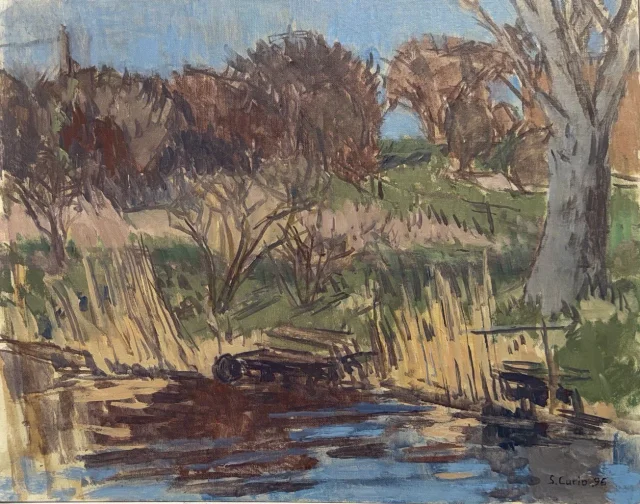
The landscape of her native island of Usedom runs through the work of Sabine Curio (b. 1950 in Ahlbeck). In oil paintings, watercolours and prints she devotes herself to landscapes, still lifes and nudes; occasionally she also creates book illustrations. Curio studied at the Kunsthochschule Berlin-Weissensee from 1969 to 1974, followed by painting studies with Otto Niemeyer-Holstein on Usedom in 1970/71; from 1977 to 1980 she was a master student of Wieland Förster at the Academy of Arts of the GDR. Since 1977 she has lived and worked as a freelance artist in Stolpe on Usedom. Her works are held in several museums and have been shown in numerous exhibitions since 1981.
DUBRUNFAUT, Sylvain
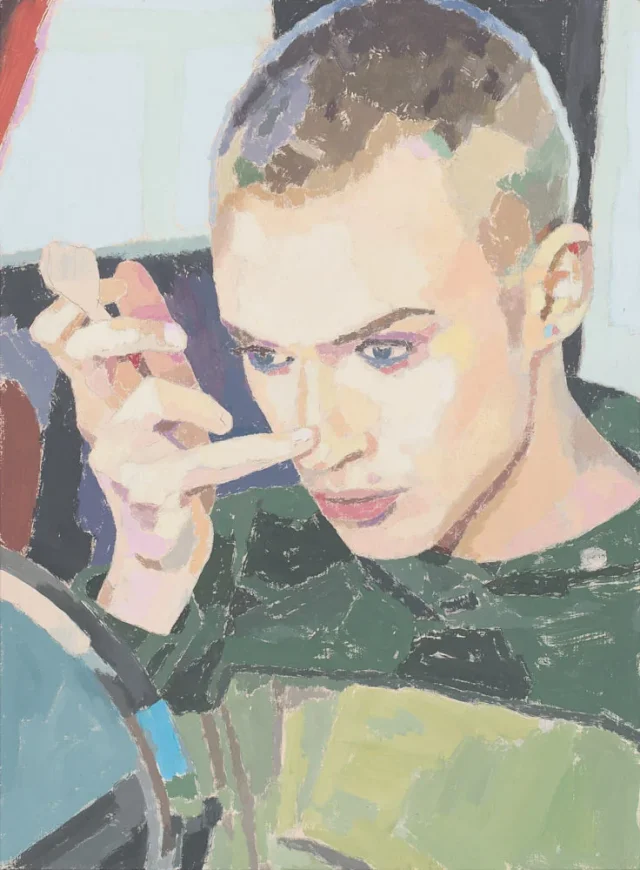
The French artist Sylvain Dubrunfaut (b. 1979) lives and works in Lille. His works are usually based on his own photographs and videos. Dubrunfaut photographs and films the people around him and searches through this material for that one decisive moment, which he then paints. In the transition from the camera image to the painting, mere resemblance dissolves: the image becomes less a representation and more a condensed, painterly interpretation of the captured moment. The focus is on the play of light, which particularly highlights his subjects, often young people. Dubrunfaut exhibits regularly in France and Belgium. His works are included in public collections in northern France, among others.
FISCHER, Lothar
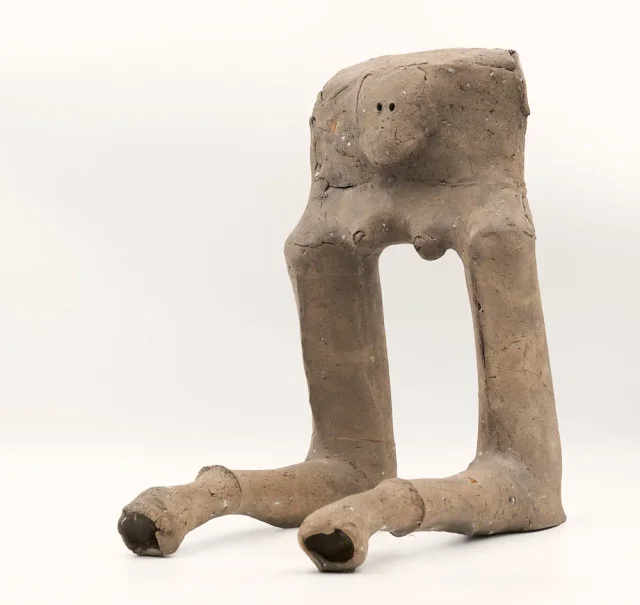
Lothar Fischer (1933–2004) was a German sculptor and the only sculptor in the Munich artists’ group SPUR, which he co-founded in 1958. After studying at the Academy of Fine Arts in Munich—where he studied under Heinrich Kirchner from 1953 onward—he developed his works from an informal impulse. At the core of his oeuvre is the human figure, particularly the female figure, which he repeatedly reinterpreted in highly reduced forms. From 1975 to 1997, Fischer taught as a professor at the Berlin University of the Arts. In recognition of his oeuvre, the Museum Lothar Fischer was established in Neumarkt in der Oberpfalz.
FÖRSTER, Wieland
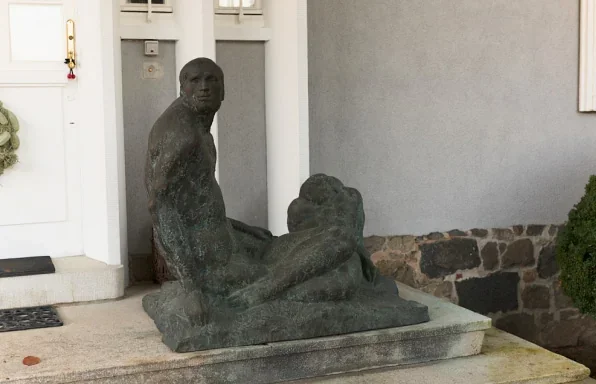
Wieland Förster (1930–2023) is one of the significant German sculptors of the second half of the twentieth century. His work returns insistently to the human being – often to the vulnerable, suffering body. This concern is inseparable from his biography: as a fifteen-year-old he witnessed the bombing of Dresden on 13 February 1945, and from 1946 to 1950 he was wrongfully imprisoned in a Soviet special camp. On account of his humanist, system-critical stance, the GDR imposed an exhibition and sales ban on him from 1968 to 1973; in 1974 he became a member of the Akademie der Künste, later its vice-president, and in 1985 he received a professorship. In bronze and stone he created figures of great intensity, among them „Der große trauernde Mann" (The Great Mourning Man, 1993) for the victims of the Dresden bombing; his works mark public sites from the Glienicke Bridge to Hamburg's HafenCity. Förster also worked as a draughtsman, printmaker and writer.
GEBKA, Jonah
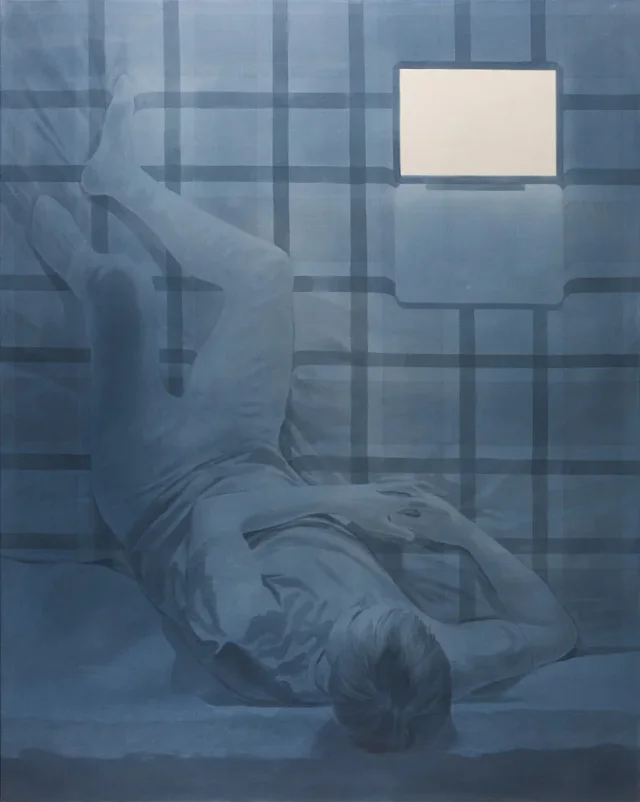
Jonah Gebka (b. 1989 in Bonn) paints, draws and makes artist's books in which he captures everyday moments of contemporary life — moments where closeness and estrangement meet. His interest lies in repetition and pattern: in the recent series "A–Z," for instance, he records the transitional instant in which a hand reaches to take a book from a shelf or to put it back. Gebka studied painting at the Academy of Fine Arts in Munich under Karin Kneffel and at the Helsinki Academy of Fine Arts. In 2023 a travel grant from the Free State of Bavaria enabled residencies in the USA; in 2026 he received a working grant from the Stiftung Kunstfonds. He lives and works in Munich.
GEHSE, Albrecht
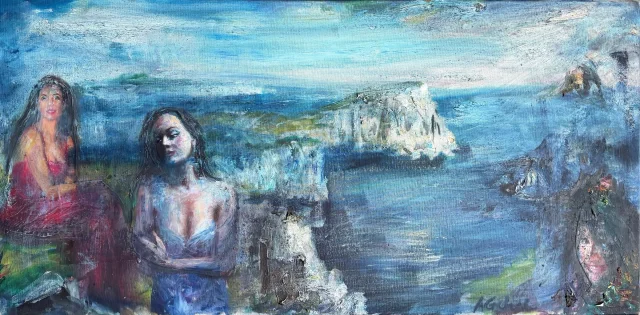
Albrecht Gehse (*Borsdorf near Leipzig) is one of the most important figures in Leipzig painting. He studied at the University of Applied Sciences for Graphic Arts and Book Design in Leipzig from 1976 to 1981, under the tutelage of Bernhard Heisig, whom he assisted from 1987 to 1990.Portraits occupy a central place in his work alongside landscapes and still lifes. In 2003, he created the official portrait of former Chancellor Helmut Kohl for the Chancellery Gallery of the Federal Chancellery; in 2026, he painted the portrait of the Lower Saxony Minister-President Stephan Weil for the State Chancellery in Hanover.Works by Albrecht Gehse are held in numerous public and private collections, including the Federal Chancellery, the Barberini Museum in Potsdam, the Museum of Fine Arts in Leipzig, and various other German art collections and institutions.
GIEBE, Hubertus
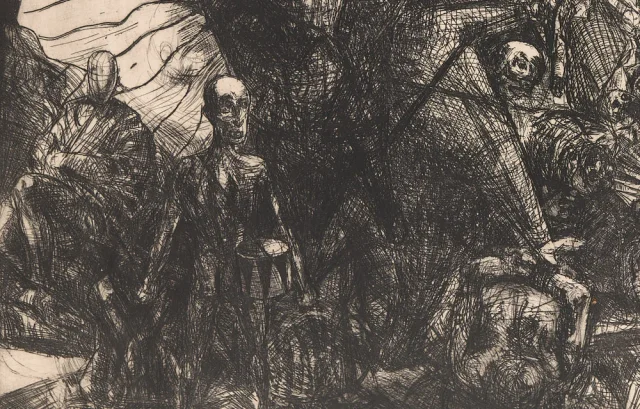
In 1976 Hubertus Giebe (b. 1953 in Dohna near Dresden) had himself struck from the rolls at his own request - "on account of too much Socialist Realism." That independence runs through his entire body of work: large-format, multi-figure history paintings in an expressive manner, peopled with shop-window mannequins, angels, mythic heroes and literary figures, with Max Beckmann, Otto Dix and Pablo Picasso as his models. He completed his studies in 1978 with an external diploma in Leipzig as a master student of Bernhard Heisig, and first drew wide notice with forty etchings for a bibliophile edition of Günter Grass's "The Tin Drum." International attention came above all with his solo exhibition "Geschichtsbilder" at the 44th Venice Biennale in 1990. Giebe lives and works in Dresden and handed his archive to the Akademie der Künste in Berlin in 2012.
GROTE, Max
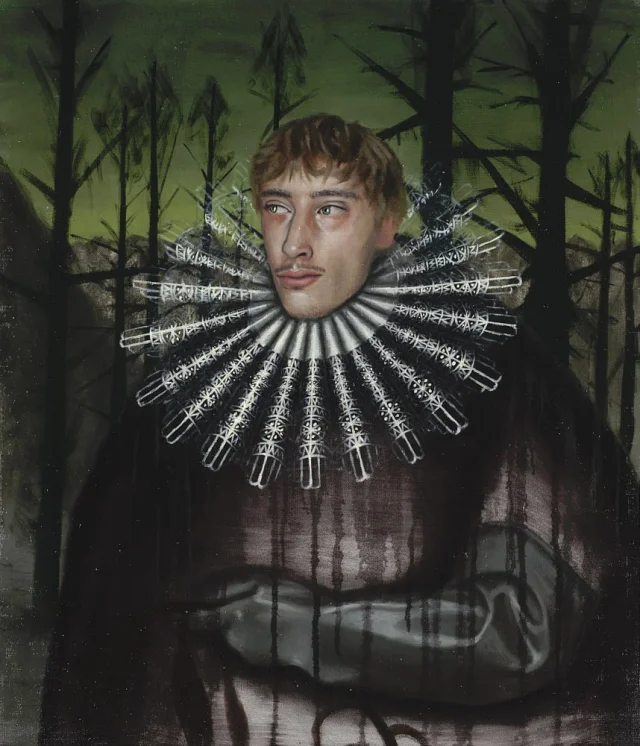
Max Grote (*2003) is a young painter who lives and works in Hamburg. From 2022 to 2024, he studied at the Weißensee School of Art and Design Berlin and has continued his studies since 2024 at the Hochschule für Bildende Künste Hamburg (HFBK Hamburg) under Jorinde Voigt. Grote paints large-scale oil paintings. Characteristic of his work is the interplay of an Old Masterly painterly approach with a contemporary perspective: dark, dramatic scenes, equestrian figures, full-body studies, portraits, and, above all, self-portraits. He repeatedly places himself within the image as the protagonist of his works, at times assuming mythologically charged roles. In 2026, his group of works Vanitasparade was presented as part of the Made in Potsdam festival at Kunstraum Potsdam.
GRÜTZKE, Johannes
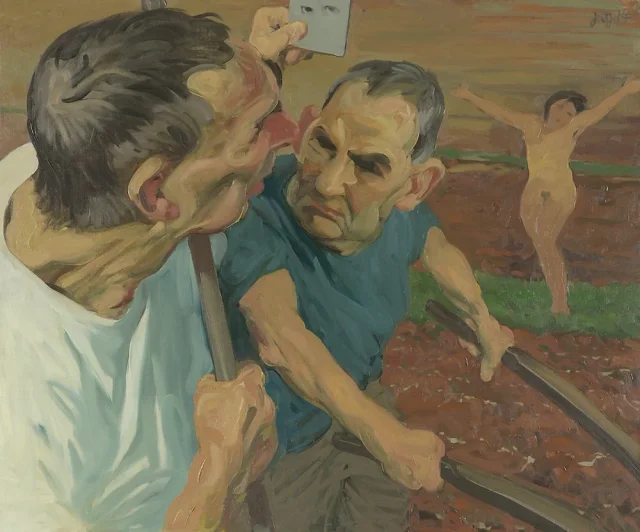
Johannes Grützke (1937–2017) was a German painter, draughtsman, and printmaker, and one of the leading representatives of figurative painting in post-war Germany. He studied at the Berlin University of the Arts (Hochschule für Bildende Künste Berlin) from 1957 to 1964 and, in 1973, co-founded the Schule der Neuen Prächtigkeit ("School of New Splendour") with Matthias Koeppel and Manfred Bluth, a group that consciously opposed the dominance of abstraction.Grützke's work combines Old Master painting techniques with an expressive, often grotesque visual language. His paintings are distinguished by their psychological depth, ironic wit, and critical engagement with social and historical themes. Alongside portraits and self-portraits, he produced numerous large-scale history paintings and public commissions, including the monumental cycle Der Zug der Volksvertreter (The Procession of the People's Representatives) for the German Reichstag in Berlin.From 1992 to 2002, Grützke served as Professor of Painting at the Academy of Fine Arts in Nuremberg. His works are held in numerous public and private collections.
HAFNER, Jonas
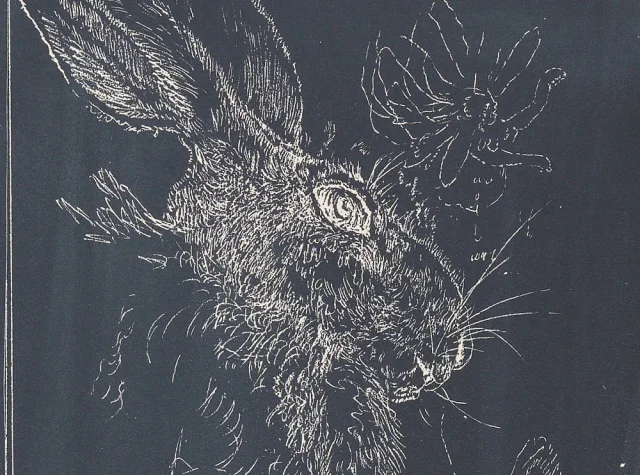
Swans, birds, fabulous creatures: in his finely worked etchings Jonas Hafner (b. 1940 in Augsburg) unfolds a poetic imagery drawn from mythology, literature and nature, dreamlike and playful in character. He is known above all for his printmaking. Hafner studied under Dieter Roth and Joseph Beuys and taught as a professor in Augsburg and, from 1989, at the Hochschule für bildende Künste in Hamburg. Many of his works appeared in the renowned editions of Griffelkunst Hamburg and so found a wide audience. His signed original etchings make an appealing and affordable entry point into contemporary printmaking.
HAMMARI, Hanna-Maria
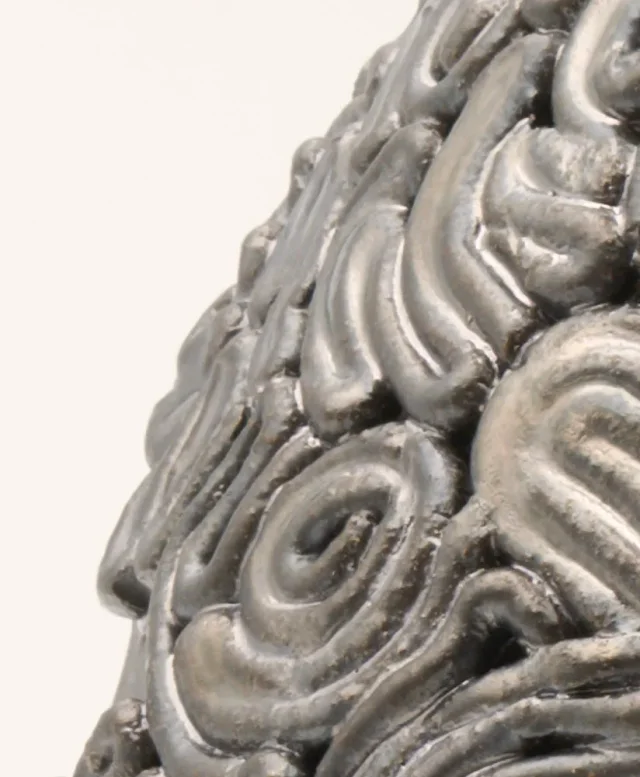
Hanna-Maria Hammari (*1986 in Tornio, Finland, lives and works in Frankfurt am Main) is a sculptor and a graduate of the Städelschule in Frankfurt. She repeatedly imbues her often abstract works with subtle anthropomorphic qualities.Her works have been exhibited at institutions including the Museum Folkwang in Essen, the Kunsthalle Baden-Baden, and the Frankfurter Kunstverein.
HAMMER, Paule
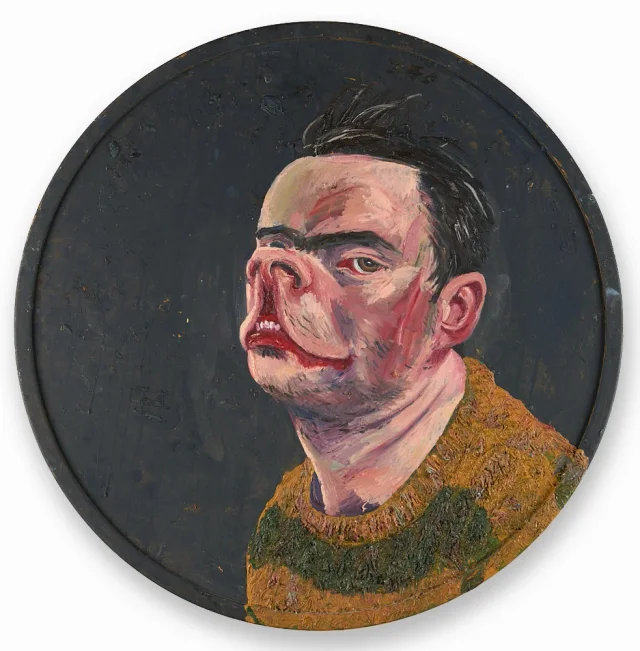
Paule Hammer (b. 1975 in Leipzig) weaves image and text into layered pictorial narratives in which philosophical reflection, everyday observation, dreams and stray thoughts flow together. His often labyrinthine, first-person compositions build encyclopaedic worlds that hover between diary, self-interrogation and an attempt to read the world. Hammer studied at the Academy of Fine Arts (HGB) in Leipzig, was a master student of Sighard Gille, and now teaches there himself. He is also a musician and founded the Leipzig artists' house "Frühauf" in 2002. His work is held at the Museum Kunstpalast in Düsseldorf and the Museum der bildenden Künste Leipzig, among others.
HEISIG, Bernhard
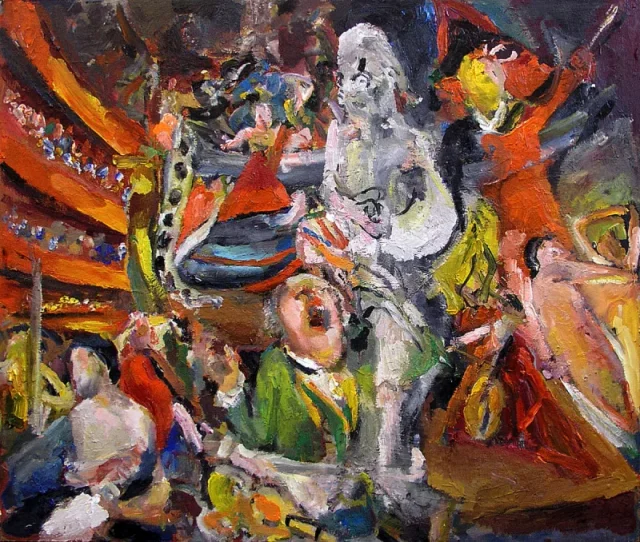
Bernhard Heisig (1925–2011) was one of the outstanding figures of the Leipzig School. His art is marked by an expressive, dynamic visual language and a passionate sense of colour that places him in the tradition of Max Beckmann, Otto Dix and Oskar Kokoschka. Again and again he wrested his pictures from himself in a restless process of overpainting that could last for years, creating haunting works that grapple above all with the horrors of war and German history. From his native Breslau, Heisig came to Leipzig in 1948, where, as long-serving rector and professor at the Academy of Fine Arts, he shaped an entire generation of artists. Together with Wolfgang Mattheuer and Werner Tübke he is regarded as a founder of the Leipzig School and a formative teacher of the later New Leipzig School. His work is held in major museums and continues to command attention on the art market.
HEPP, Johannes
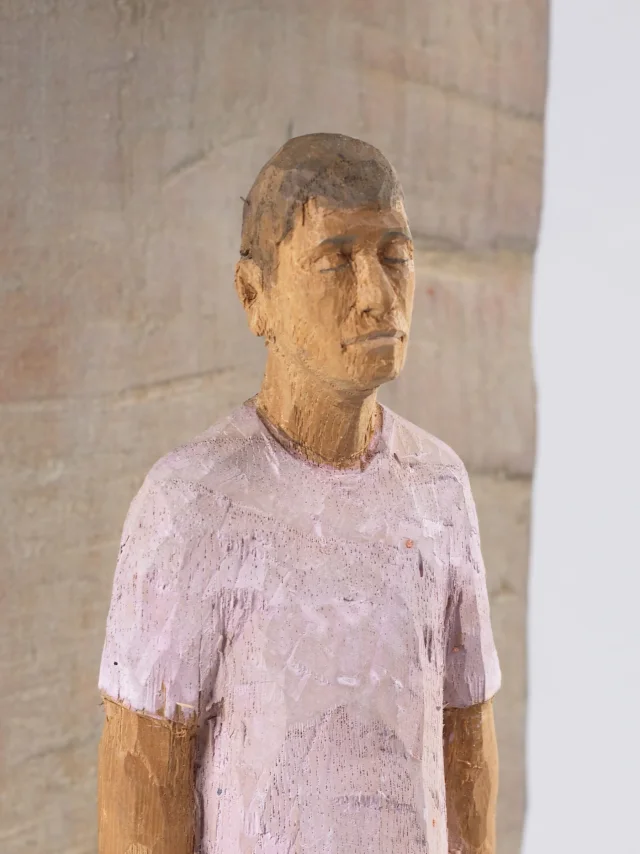
The sculptor Johannes Hepp (b. 1986 in Werneck near Würzburg) lives and works in Freiburg, where he studied at the Edith Maryon School of Art and now teaches there himself. At the heart of his work are small human figures that he releases from a single piece of soft wood, usually poplar or lime. Thin watercolour glazes and the visible traces of his tools keep the wood present. In 2018 Hepp received the Cultural Advancement Prize of the City of Würzburg.
JEAN, Marcel
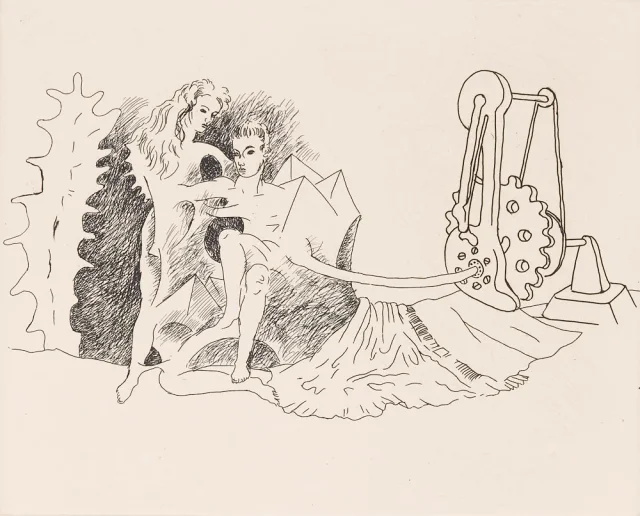
A fabric-covered woman's head with zipper eyes — with the "Spectre du Gardénia" (1936) Marcel Jean (1900–1993) created one of the icons of Surrealist object art. The French artist and writer was a significant figure of Surrealism, his output spanning painting, drawing, collage and, above all, the objects so characteristic of the movement. Jean belonged to the Paris Surrealist circle and took part in landmark exhibitions such as "Fantastic Art, Dada and Surrealism" at the Museum of Modern Art in New York. As a theorist, his "Histoire de la peinture surréaliste" remains one of the most important comprehensive accounts of Surrealist painting. His work unites poetic invention with a fine instinct for the enigmatic and the unconscious.
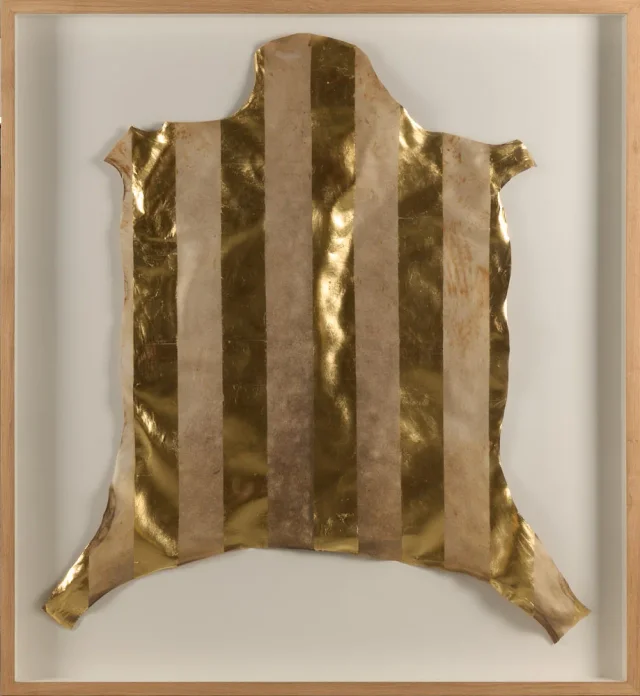
JUNGEN, Brian
Nike Air Jordan sneakers become masks, plastic chairs become whale skeletons, golf bags become totem poles: Brian Jungen (b. 1970 in Fort St. John, British Columbia) takes apart consumer goods and reassembles them into objects that hover between the Northwest Coast Indigenous tradition of form and modern sculpture. The son of a Swiss immigrant and a mother of the Dane-zaa nation, he draws on both heritages in a critical inquiry into culture, commodity and authenticity. He came to prominence with the series "Prototypes for New Understanding" (1998–2005). Jungen studied at the Emily Carr University of Art and Design in Vancouver; he lives and works in the North Okanagan of British Columbia.
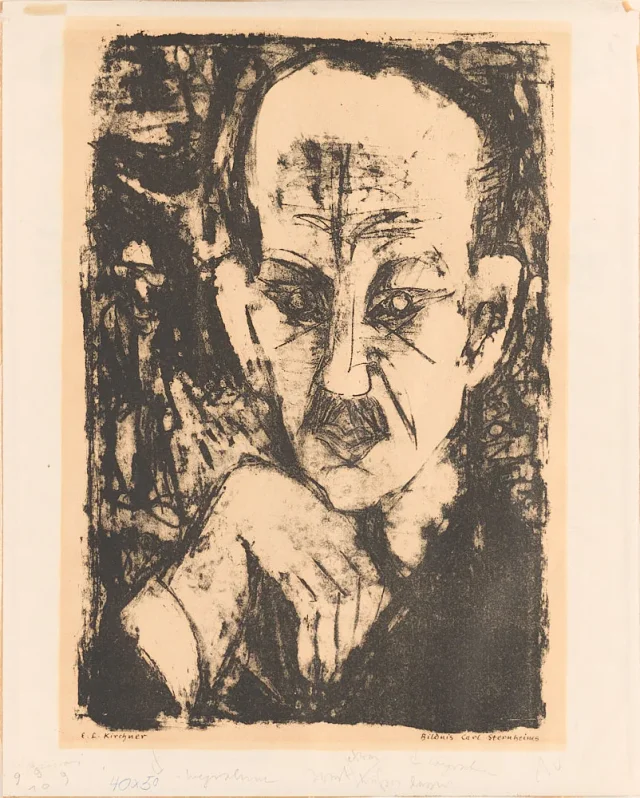
KIRCHNER, Ernst Ludwig
Ernst Ludwig Kirchner (1880–1938) was a co-founder of the Expressionist group "Die Brücke" and ranks among the most important figures of German Expressionism. Bold colour, dynamic form and an expressive idiom define his work. After studying architecture in Dresden, he devoted himself entirely to art, becoming known above all for his depictions of modern city life, his nudes in nature and his striking woodcuts. After the First World War he settled in Davos, Switzerland, where the alpine landscape increasingly shaped his work.
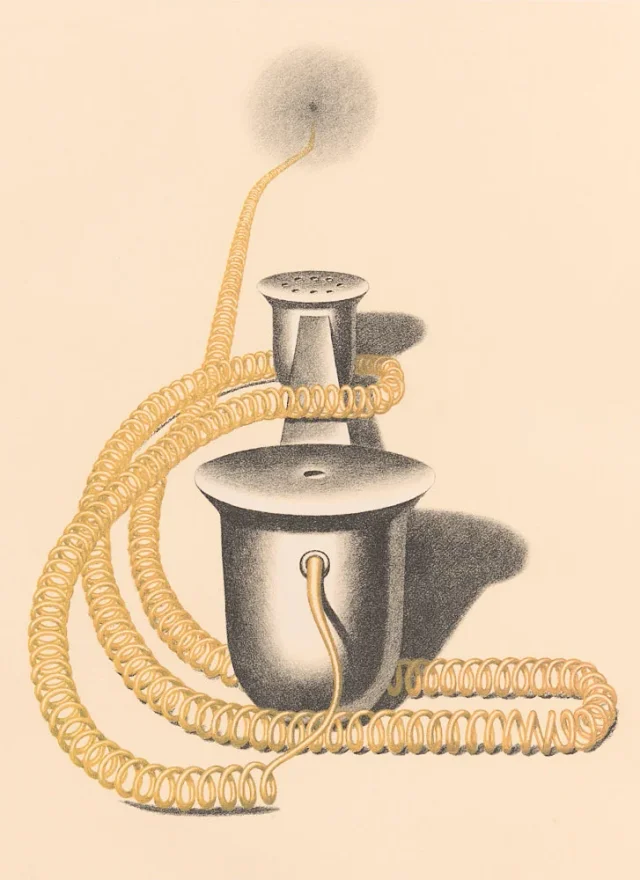
KLAPHECK, Konrad
Typewriters, sewing machines, telephones, irons: Konrad Klapheck (1935–2023) turned everyday objects into enigmatic "machine pictures," estranging them and endowing them with human traits. While many of his contemporaries worked abstractly, the Düsseldorf-born artist pursued a precise, representational painting whose style drew on Surrealism, Neorealism and, in part, Pop Art. From 1954 to 1958 he studied at the Düsseldorf Art Academy under Bruno Goller, and later taught there himself. Klapheck is counted among the major figures of the German post-war avant-garde.
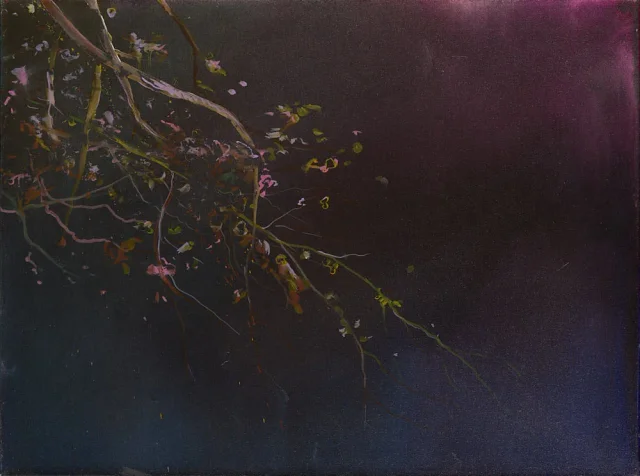
KLÜMPEN, Robert
Robert Klümpen (b. 1973 in Issum) is a German painter. From 1994 to 2002 he studied at the Düsseldorf Art Academy under A. R. Penck and Dieter Krieg, becoming a master student of the latter. His painting is marked by an apparent realism that is repeatedly broken open by abstract moments; he often depicts life-size rooms, scenes and street views with lanterns. Klümpen received the Villa Romana Prize in 2005 and teaches as a professor of painting; he lives and works in Cologne and Braunschweig.
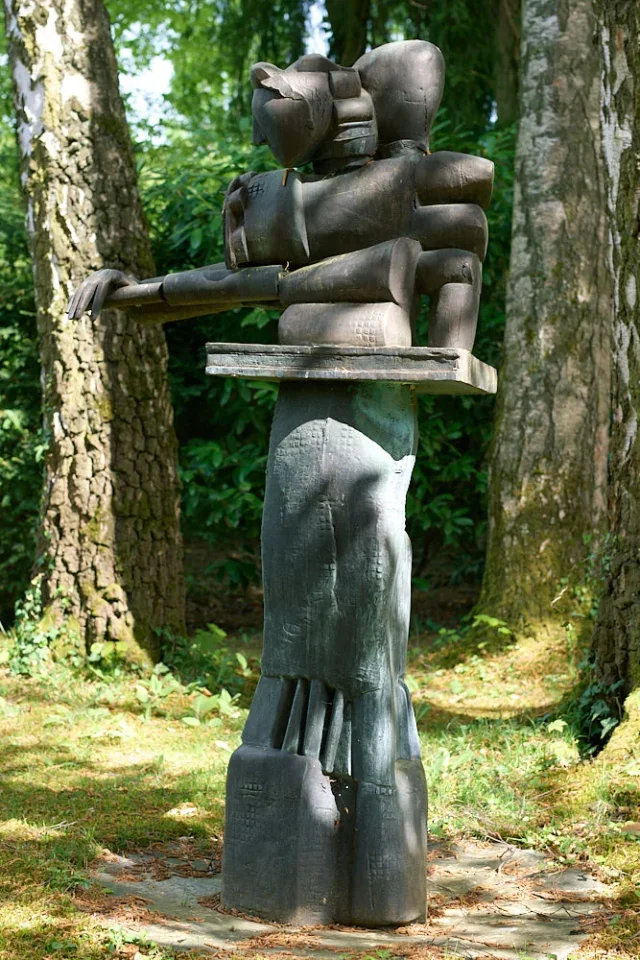
KÖKER, Azade
Azade Köker (born 1949 in Istanbul) initially trained as a ceramic artist in Istanbul. From the outset of her career, she created large-scale terracotta sculptures of female figures whose archaic formal language became a defining characteristic of her artistic practice. Her sculptures and reliefs evolve into condensed images of urban and natural landscapes, always bearing the traces of human intervention; themes such as migration, war, and the relationship between urbanity and nature have permeated her work since the early 1980s. After completing her studies in Istanbul, Köker continued her education in Berlin under Lothar Fischer. She later taught as a professor in Halle and served as head of the Institute of Fine Arts at the Technical University of Braunschweig. Her award-winning works are represented in major public collections, including the British Museum in London, the Museum für Moderne Kunst Frankfurt, and the Berlinische Galerie.
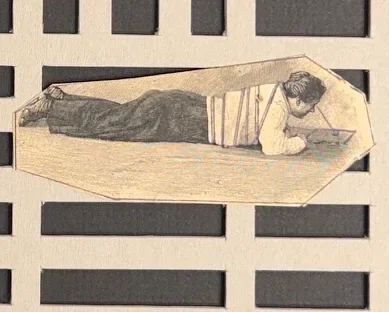
KOTÁTKOVÁ, Eva
The sculptor, installation and performance artist Eva Koťátková (b. 1982 in Prague) explores the social, institutional and bodily structures of everyday life — the rules and constraints that shape how we think, learn, move and behave. In expansive installations the human body appears as an envelope, a lattice, at times a prison; hierarchies, dependencies and their psychological effects lie at the centre of her work. Koťátková studied at the Academy of Fine Arts in Prague, at the city's Academy of Arts, Architecture and Design, and at the San Francisco Art Institute. Her installation "Asylum" was shown at the 2013 Venice Biennale, and her work has appeared at the New Museum in New York, among others. She lives and works in Prague.
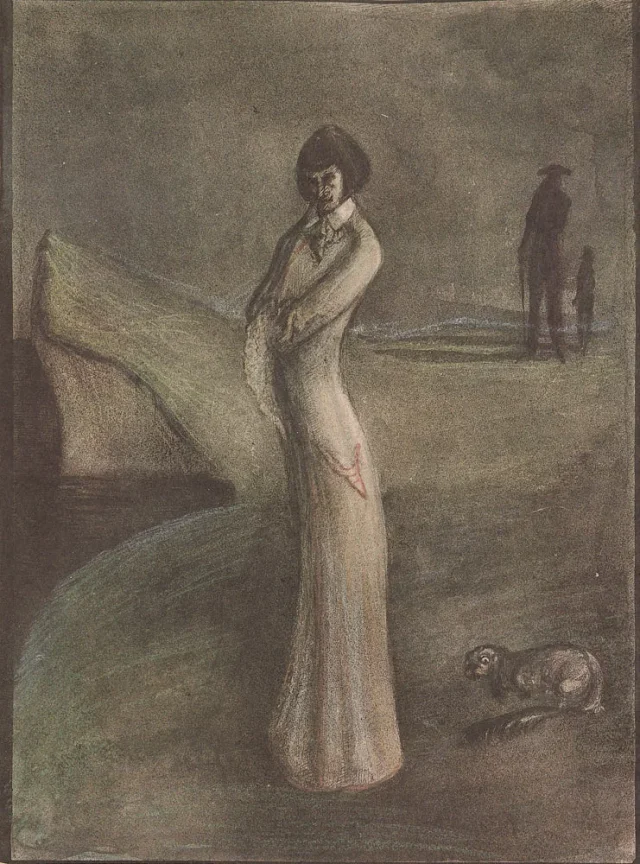
KUBIN, Alfred
Death, fear and the uncanny converge in the dark, dreamlike imagery of Alfred Kubin (1877–1959). With a fine pen-and-ink technique, the Austrian draughtsman and illustrator created unmistakable scenes full of grotesque and fantastical figures, and ranks among the foremost representatives of Symbolism and fantastic art. Born in Leitmeritz in Bohemia, he settled early at Zwickledt in Upper Austria, where he worked in seclusion for most of his life. Kubin was a member of the Blaue Reiter group and illustrated works by Edgar Allan Poe, E. T. A. Hoffmann and Fyodor Dostoevsky; in 1909 he published his own fantastic novel, "Die andere Seite" (The Other Side). His work exerted a profound influence on Expressionism and Surrealist art.
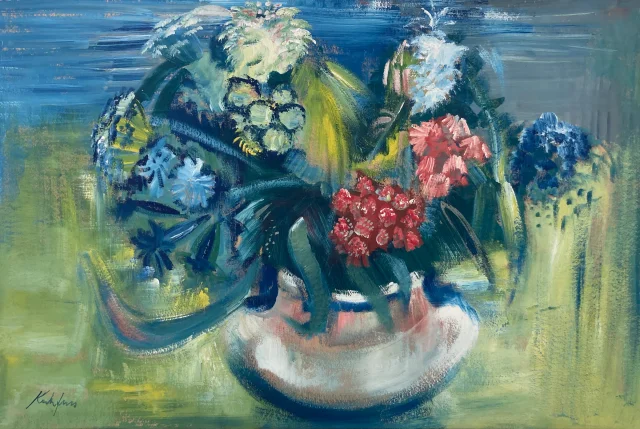
KUHFUSS, Paul
Paul Kuhfuss (1883–1960) is one of the independent Berlin painters of the first half of the 20th century. His richly coloured œuvre comprises landscapes, city views and still lifes, painted with a spontaneous stroke and a keen sense of colour contrast. Trained at the Royal Art School Berlin under Philipp Franck and in the landscape class of the Berlin Academy, Kuhfuss worked as an art teacher from 1907 and lived in Pankow from 1910. From 1912 he took part in numerous exhibitions, including the Great Berlin Art Exhibition, the Free Secession under Max Liebermann and the Berlin Secession under Lovis Corinth. In 1960, the year of his death, he was honoured as a prize winner of the Great Berlin Art Exhibition.
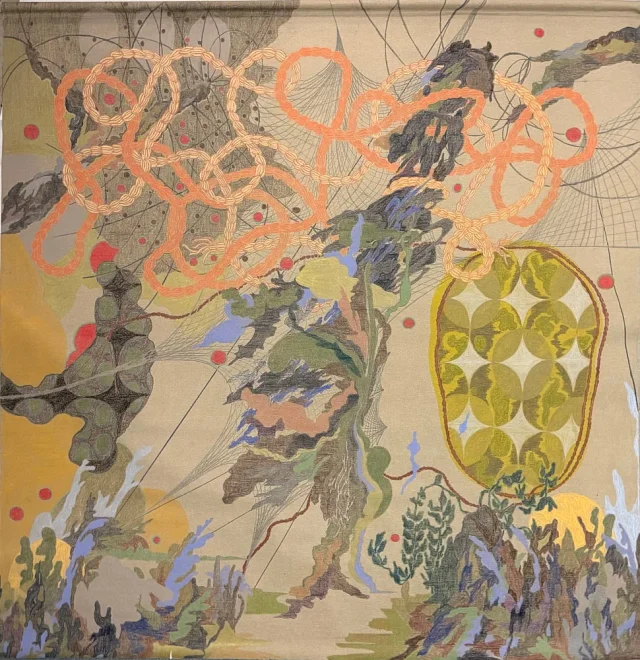
LEE, Jung A
Jung A Lee (b. 1995 in South Korea) lives and works in Berlin and studies painting at the Weißensee Academy of Art Berlin. Her painting is concerned with capturing and reproducing unconscious, potential situations and states – images that circle a space of possibility rather than depicting a fixed scene. The result is open, suspended compositions between perception and imagination.
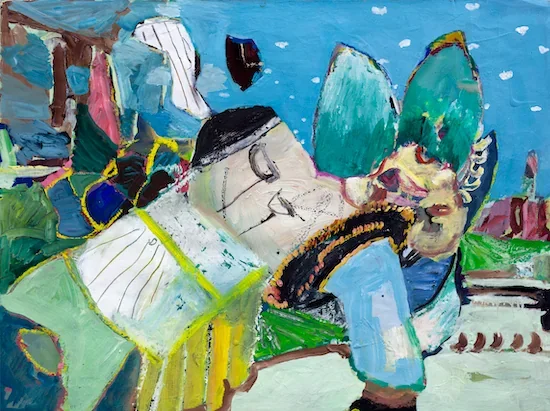
LIEBMANN, Werner
Werner Liebmann (born 1951 in Königsthal, Thuringia, Germany) is a German painter, printmaker, and university professor. After completing a degree in chemistry and working for several years as a research chemist, he decided to pursue a career in the arts. He studied painting at the Burg Giebichenstein University of Art and Design in Halle and subsequently became a master student of Bernhard Heisig at the Academy of Visual Arts Leipzig.Beginning in 1986, Liebmann taught at the Dresden Academy of Fine Arts, where he was later appointed professor. From 1993 to 2017, he served as Professor of Painting at the Weißensee Academy of Art Berlin. Since then, he has devoted himself exclusively to his work as an independent artist based in Berlin.Liebmann's paintings are distinguished by their expressive visual language, luminous color palette, and multilayered compositions that often move fluidly between figuration and abstraction. Landscapes, human figures, and architectural elements merge into poetic, narrative worlds that invite viewers to form their own interpretations. His work has been exhibited nationally and internationally and is represented in numerous prestigious public and private collections.
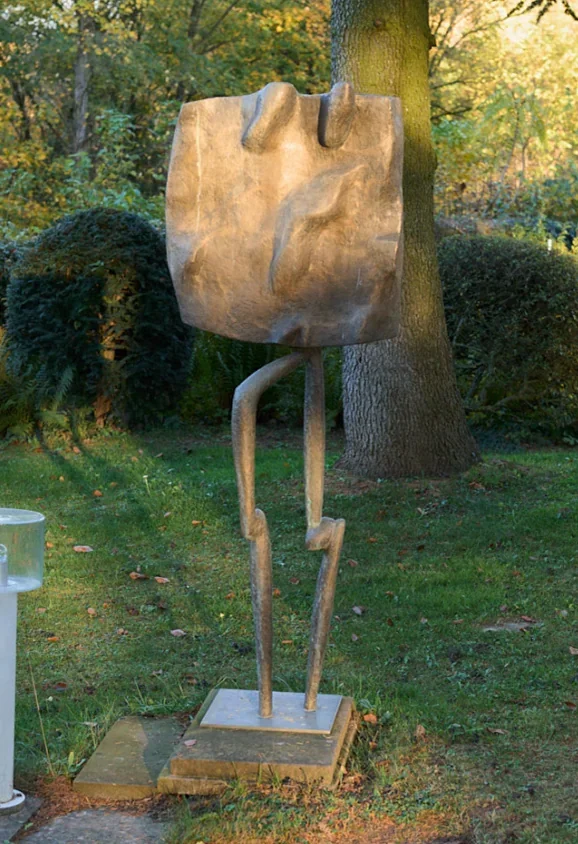
LOTH, Wilhelm
The female body lies at the centre of the work of Wilhelm Loth (1920–1993). Born in Darmstadt, the sculptor took his early bearings from Wilhelm Lehmbruck and Ernst Barlach and was encouraged by Käthe Kollwitz to devote himself entirely to sculpture; he later attended Toni Stadler's sculpture class at the Städelschule in Frankfurt. From the mid-1960s Loth increasingly set stereometric forms – often cubes – against his figures and torsos, creating a charged confrontation of the soft and the hard. His work as a metal sculptor is counted among the New Figuration. From 1958 to 1986 he taught as professor of sculpture at the State Academy of Fine Arts in Karlsruhe, and in 1964 he took part in documenta III. Since 1995 the Art Prize of the City of Darmstadt has borne his name.
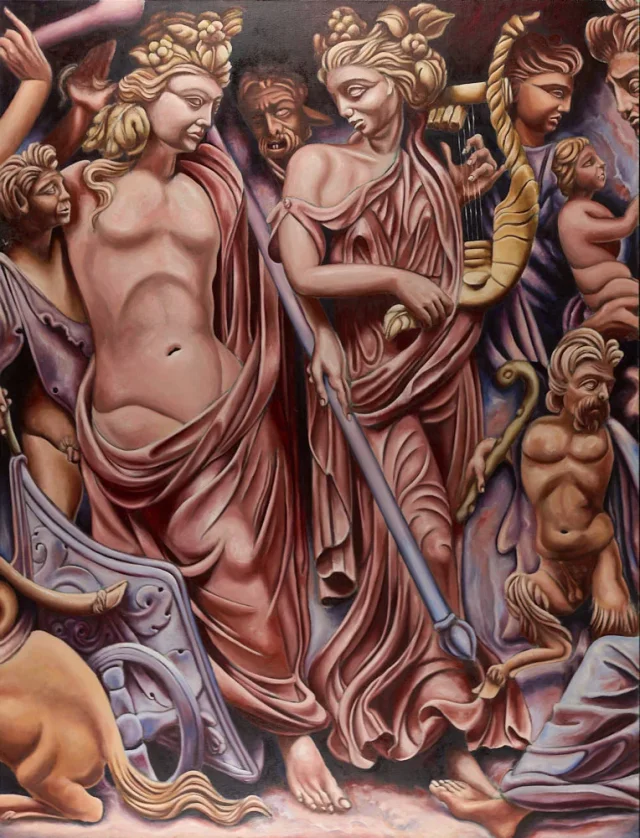
MARWITZ, Jannis
Jannis Marwitz (b. 1985 in Nuremberg) paints and draws figuratively, often drawing his motifs from elegiac, mythologically charged sources such as Greco-Roman funerary monuments. With an idiosyncratic, frequently acerbic palette, he joins old painting techniques to a markedly contemporary feel. Marwitz lives and works in Brussels and has been represented by galleries including Barbara Weiss and Lucas Hirsch; his first institutional solo exhibition in Germany was staged by the Dortmunder Kunstverein.
MATTHEUER, Wolfgang
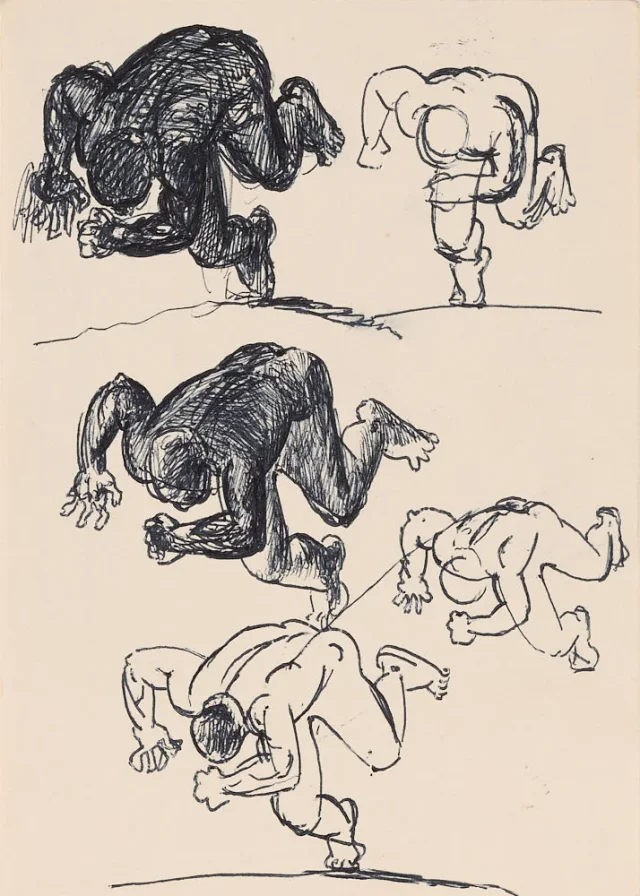
Wolfgang Mattheuer (1927–2004), alongside Werner Tübke and Bernhard Heisig, is one of the leading figures of the Leipzig School. His art is defined by a clear, representational language in which he condensed social contradictions allegorically and often critically. Landscapes, figure paintings and symbol-laden scenes combine into a probing, frequently pessimistic reflection on humanity and its age. After training as a lithographer, Mattheuer studied at the Academy of Fine Arts in Leipzig, where he later headed the painting and graphics class as a professor. From 1971 he also made sculptures, among them the famous over-life-size bronze "Der Jahrhundertschritt" (The Century Step), one of the most striking images in German history. His much-awarded work is held in the most important museums.
METZ, Arthur
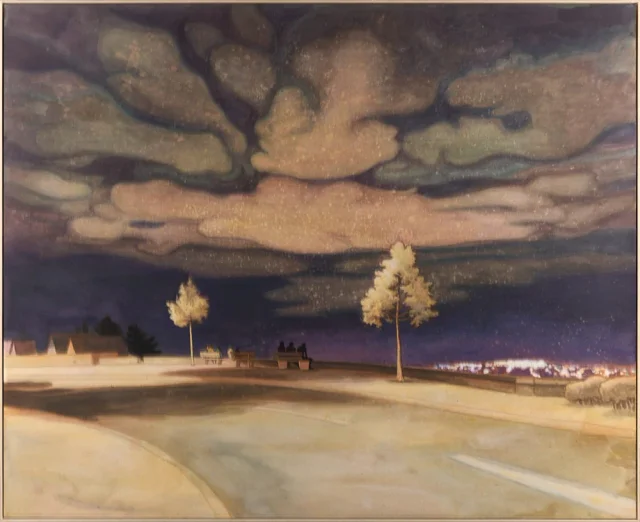
Arthur Metz (born in Lyon in 1988) works primarily on paper and wood. In paintings such as Die modernen Messen (Modern Trade Fairs), Sommer in Spanien (Summer in Spain), and Berliner U-Bahn (Berlin Underground), he combines observations of contemporary life with a light, graphic visual language. From 2017 to 2022, he studied in the class of Cordula Güdemann at the State Academy of Fine Arts Stuttgart. He now lives and works in Alsace, France. His work has been exhibited in solo and group exhibitions at galleries and museums in Germany, France, and Canada.

MICHAEL, Alan
Stock photos, magazine fragments, urban surfaces, parked cars with mirrored architecture: the painting of Alan Michael (b. 1967 in Scotland) circles around whatever moves through the image-flow of the present. On his large canvases, 1980s fashion, Soviet propaganda, Minimalism and Pop intermingle; they often look photographic yet remain suspended between document and fiction. Michael studied at the Duncan of Jordanstone College of Art & Design in Dundee and the Glasgow School of Art, and lives and works in London. His work has been shown at Tate Britain in London and the Kölnischer Kunstverein, among others.
MILLER, Matthias Josef
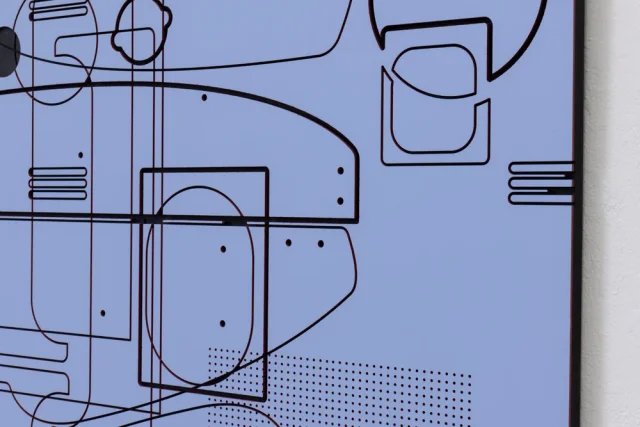
Matthias Josef Miller (b. 1989 in Überlingen) comes from a design background: as an automotive and product designer he worked for Škoda, BMW, Mini, Mercedes and Adidas, among others, before turning to independent artistic work. That dual perspective — industrial form-giving and free image-making — informs his approach. Miller lives and works in Munich and Mühldorf.
MOHOLY-NAGY, László
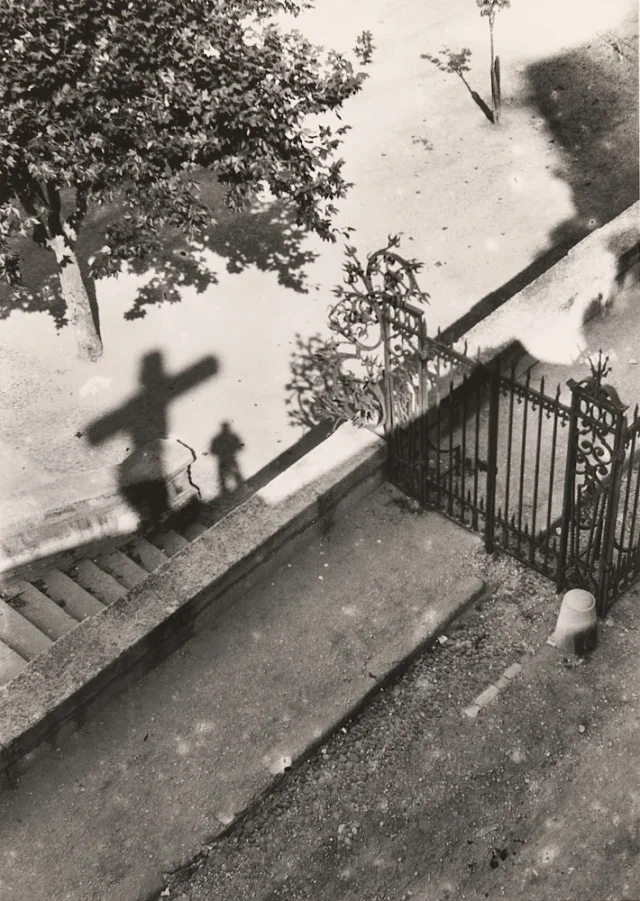
László Moholy-Nagy (1895–1946) ranks among the most versatile and influential artists of classical modernism. His work joins painting, photography, typography, film and stage design into a thoroughly experimental, constructivist language. With his "New Vision" he revolutionised photography through cameraless photograms, unusual vantage points and radical framing; with the Light-Space Modulator he also created one of the earliest electrically driven kinetic sculptures. As a master at the Bauhaus in Weimar and Dessau, he led the metal workshop and the famous preliminary course from 1923, decisively shaping the school's interdisciplinary thinking. After emigrating, he founded the New Bauhaus in Chicago in 1937, carrying the Bauhaus idea to America. His work is held today in the most important museums worldwide.
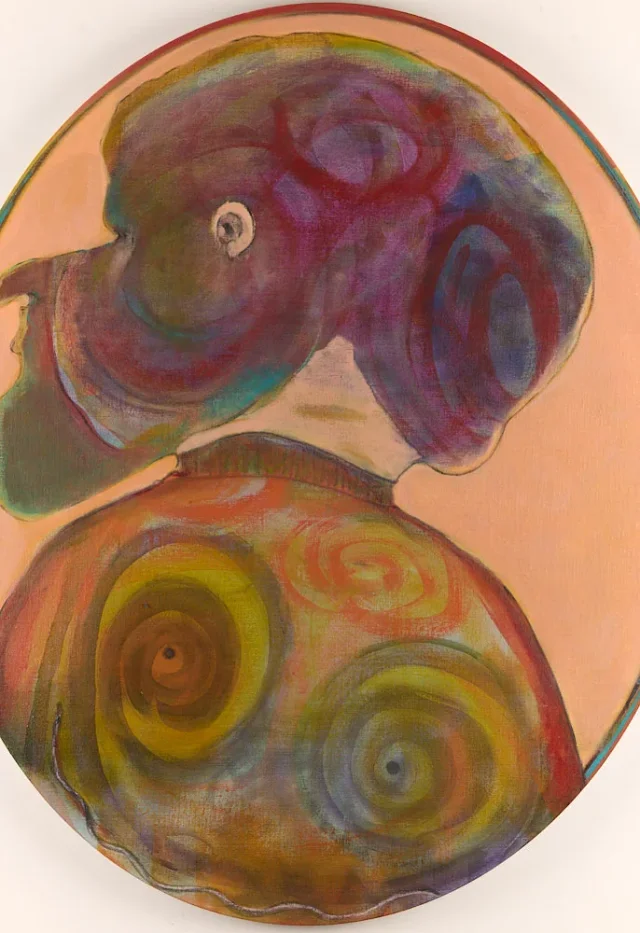
MOSLEY, Ryan
Harlequins, cabaret dancers, bearded musicians and enigmatic travellers people the canvases of Ryan Mosley (b. 1980 in Chesterfield), who sets them within surreal, open-ended narratives. Characteristic is his technique of glazed, transparent layers of colour, with which he conjures dreamily shimmering pictorial spaces. After studying at the University of Huddersfield, Mosley completed postgraduate study at the Royal College of Art in London in 2007; during that time he worked as a guard at the National Gallery, where the Old Masters became an important source of inspiration.
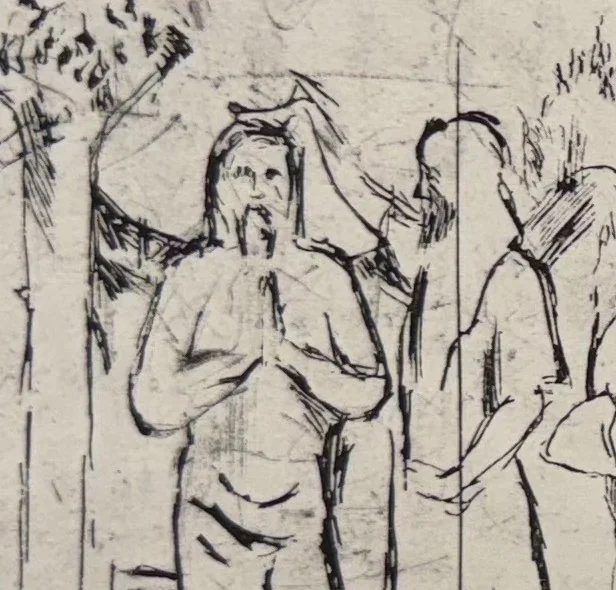
MURESAN, Ciprian
Ciprian Mureșan (b. 1977 in Dej, Romania) is one of the defining voices of contemporary Romanian art. In drawings, sculptures, videos and installations he interrogates — often with fine irony — notions of value and authorship, reflecting on the aftermath of post-communism. His work "Leap into the Void, After Three Seconds" (2004), which relocates Yves Klein's famous image to a street in Cluj, brought him wide attention. Mureșan studied at the University of Art and Design in Cluj and represented Romania at the 53rd Venice Biennale in 2009; his work has been shown at the Centre Pompidou, the New Museum and Tate Modern, among others. He lives and works in Cluj.
NOVITSKOVA, Katja
Katja Novitskova (b. 1984 in Tallinn) is an Estonian artist who lives and works in Amsterdam and Berlin. In large-scale assemblages she combines organic and technical materials – from photographs and found objects to aluminium and plastic – examining the entanglement of biology, technology and consumer capitalism. Series such as „Approximation“ and „Growth Potential“ address data-driven images of nature and ecological upheaval. In 2017 Novitskova represented Estonia at the 57th Venice Biennale.
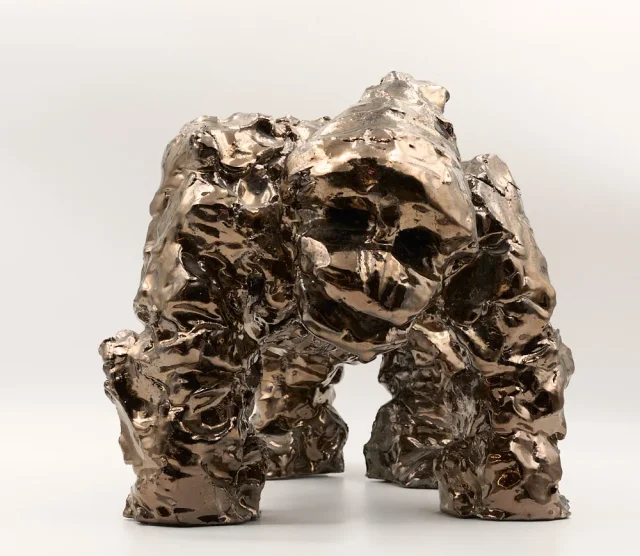
PASSENS, Gregor
Gregor Passens (b. 1974 in Berchtesgaden) is a Bavarian sculptor. After training at the woodcarving school in Berchtesgaden, he studied at the Academy of Fine Arts in Munich, among others as a master student of Nikolaus Gerhart, and later worked there as an artistic associate. One of his best-known motifs is KONG – a King Kong figure that Passens constructs from scaffolding, pipes and dark sheeting and lets "appear" in changing places, from the assembly hall of the Munich Academy to Santiago de Chile. King Kong, the wanderer between jungle and city transformed again and again by new cultural contexts, is here a traveller like the artist himself. "KONG BOZZETTI" is the small-scale model version of this giant – a bozzetto, the kind of preliminary study sculptors have traditionally made. In miniature, it preserves the force and the improvised, found-object character of the large figure, making the travelling, ever-changing shape of KONG tangible.
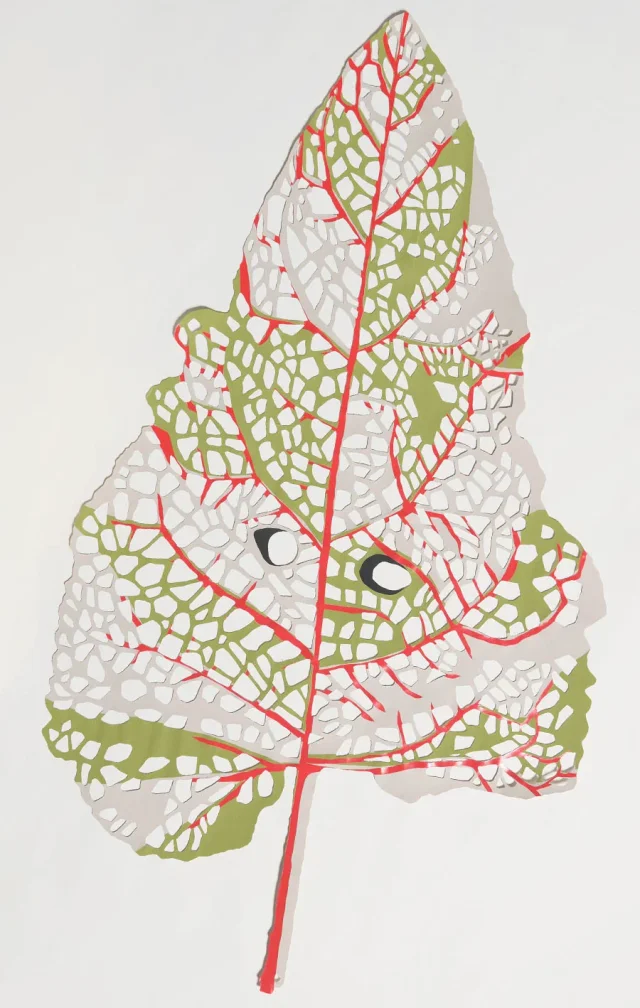
PERITON, Simon
Simon Periton (b. 1964 in Kent) is a British artist who lives and works in London. He became known for intricate paper cutouts reminiscent of doilies, combining floral or natural motifs with references to anarchy, punk and subculture. His work spans painting, sculpture and installation and draws on sources from fin-de-siècle aestheticism to the visual language of punk. Periton studied at Saint Martin’s School of Art; his work is held in collections including MoMA, Tate and the Victoria and Albert Museum.
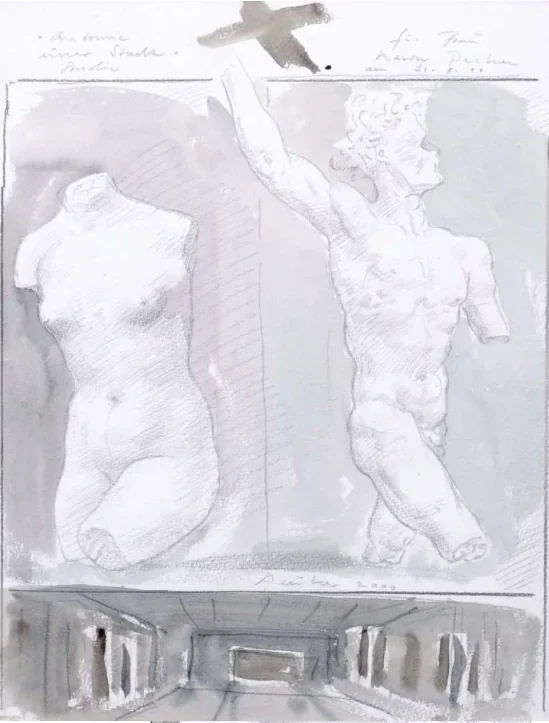
PEUKER, Wolfgang
Wolfgang Peuker (1945–2001) was shaped by the Leipzig School: from 1965 to 1970 he studied at the Academy of Fine Arts (HGB) in Leipzig under Harry Blume, Werner Tübke, Bernhard Heisig and Wolfgang Mattheuer. His figurative, precisely composed paintings combine this training with a cool, distinctive view of people and contemporary history. Born in Ústí nad Labem, Peuker taught at the HGB Leipzig from 1977 to 1989 and from 1993 as a professor at the Kunsthochschule Berlin-Weißensee. In 1994 he moved to Groß Glienicke near Berlin, where he died in 2001.
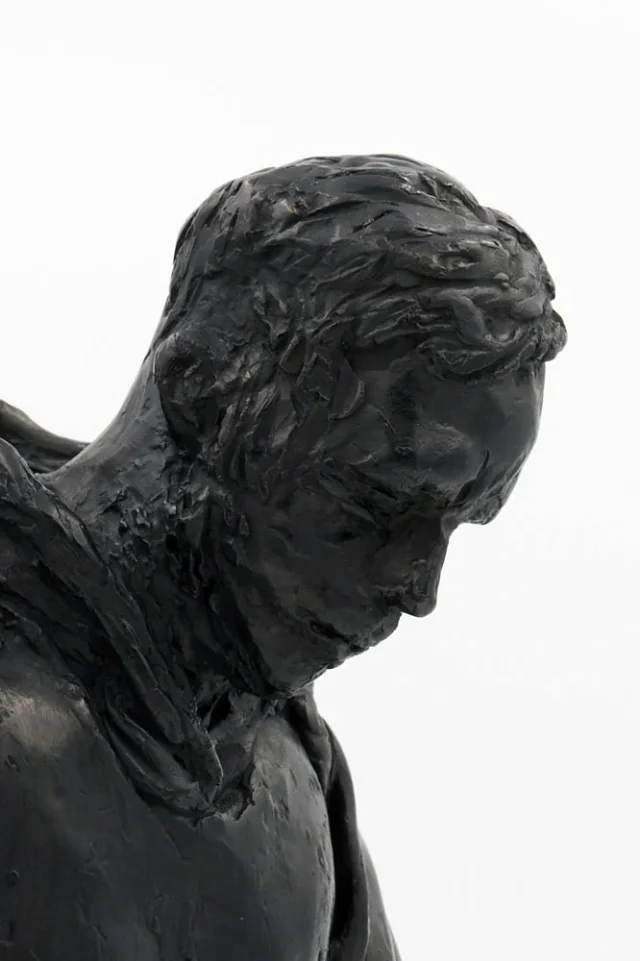
RAUCH, Neo
Neo Rauch (b. 1960 in Leipzig) is regarded as the best-known representative of the New Leipzig School. In an often melancholy, muted palette he shows figures in enigmatic, contradictory situations where the laws of space and time seem suspended — a visual language between Surrealism, realism and echoes of Pop Art. Rauch studied from 1981 under Arno Rink at the Academy of Fine Arts (HGB) in Leipzig and became a master student of Bernhard Heisig; in 2005 he was himself appointed professor there. His work is held in leading museums and significant collections worldwide. He lives and works in Leipzig.
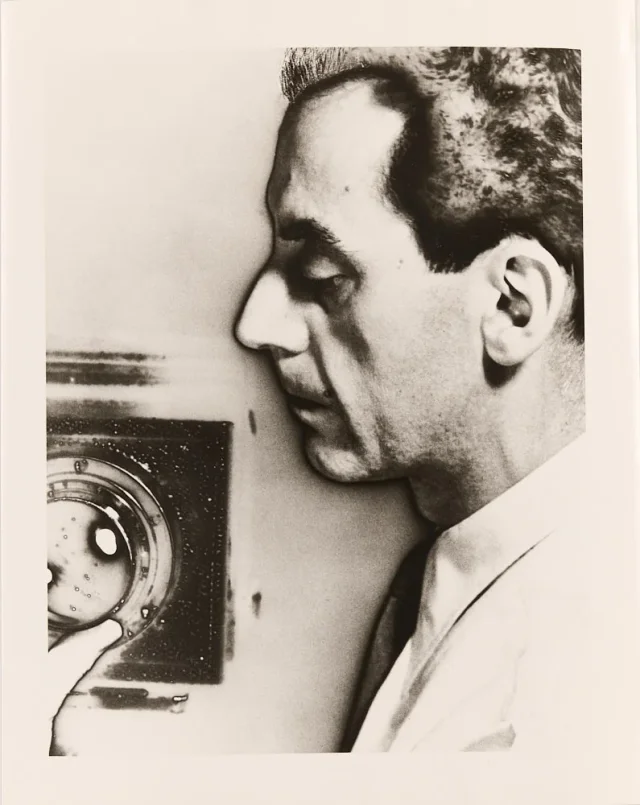
RAY, Man
Man Ray (1890–1976), born Emmanuel Radnitzky, is one of the most dazzling figures of Dada and Surrealism — the only American to play a central role in both movements. He worked equally as painter, object-maker, filmmaker and photographer, yet it was above all his photographic innovations that made him world-famous: with the cameraless "Rayographs" and the technique of solarisation he opened entirely new, dreamlike and poetic possibilities for photography. In his Paris studio he portrayed the avant-garde of his day, from Picasso to James Joyce to Salvador Dalí. He spent most of his career in Paris, and his iconic objects and images are today a fixed part of twentieth-century art history.
REIMER, Hermann
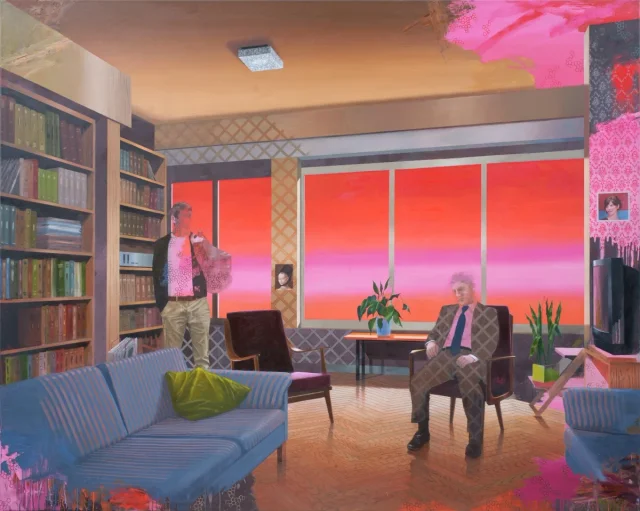
Hermann Reimer (*1959, Münster, Germany) is a German painter and draftsman who lives and works in Berlin. After completing a degree in physics in 1983, he turned to the visual arts and studied painting at the Berlin University of the Arts (formerly Hochschule der Künste Berlin) from 1984 to 1989. In 1990, he became a Meisterschüler (master student) of Professor Klaus Fußmann.Reimer's work encompasses primarily oil paintings, watercolors, and drawings. He is particularly known for his atmospheric interiors and landscapes, in which light, space, and memory play a central role. His paintings combine figurative representation with poetic and, at times, subtly surreal elements.Since the 1990s, Hermann Reimer has exhibited regularly in galleries, art associations, and at international art fairs. His works are held in both private and public collections in Germany and abroad.
RICHTER, Daniel
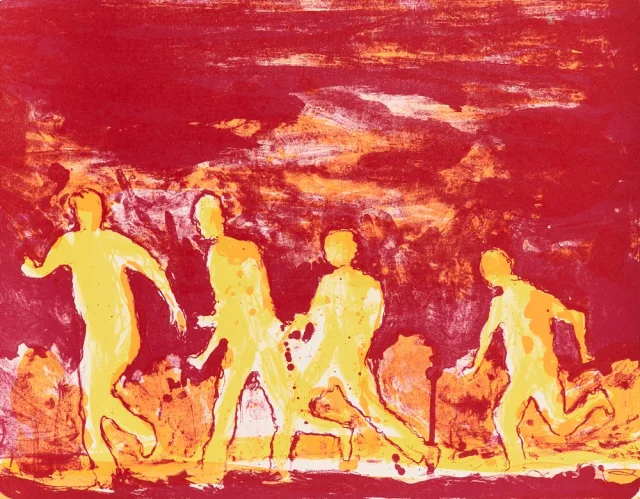
Daniel Richter (b. 1962 in Eutin) is one of the most influential German painters working today. His work is marked by a striking change of style: dense, abstract beginnings gave way around the year 2000 to a turn towards figurative painting. Richter became known above all for his large, multi-figure scenes, in which he condenses motifs from news images, history books and pop culture into layered, often politically charged worlds. Characteristic are his luminous, almost supernaturally glowing colours. He studied at the Hochschule für bildende Künste in Hamburg under Werner Büttner and worked as an assistant to Albert Oehlen; as a long-serving professor in Vienna and Berlin he also shaped a younger generation of artists.
RINK, Arno
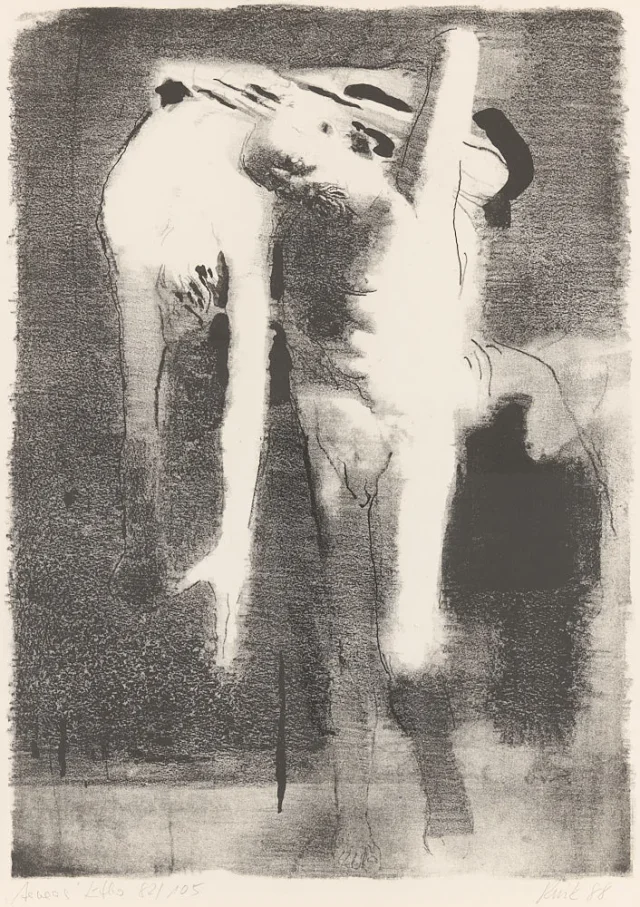
Arno Rink (1940–2017) condenses allegorical, mythological and erotic motifs into haunting compositions of great atmospheric density and painterly sensuousness. With a masterful command of colour, light and composition, he ranks among the most important figures of the second generation of the Leipzig School. Rink studied at the Academy of Fine Arts (HGB) in Leipzig under Werner Tübke and Bernhard Heisig, among others, and taught there himself for more than 35 years as a formative professor. As a teacher he paved the way for the New Leipzig School and taught later stars such as Neo Rauch, Michael Triegel and Tim Eitel. His work is held in significant public and private collections.
SCHEERS, Vincent
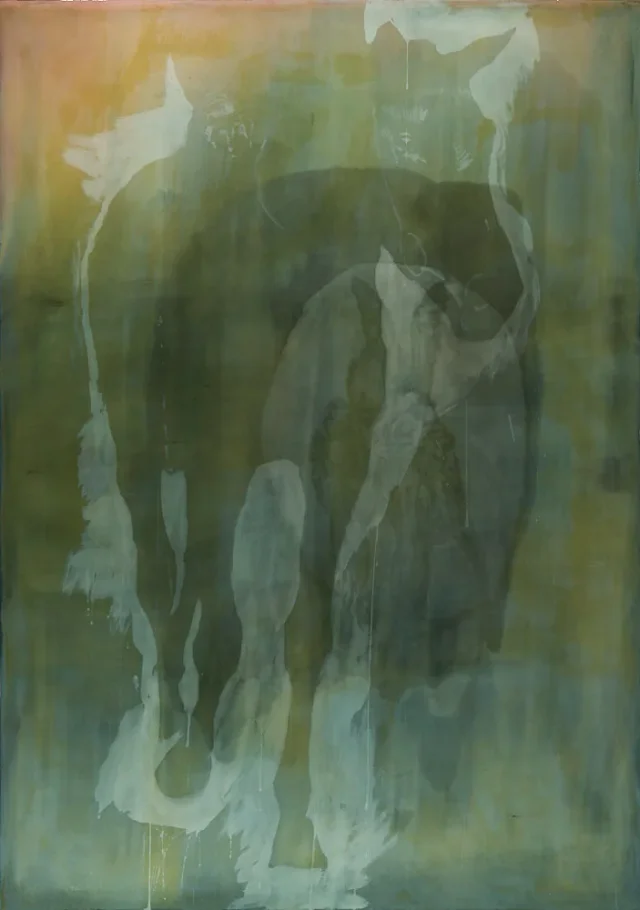
Vincent Scheers (b. 1990 in Belgium) works with unusual means: natural pigments, dyes and bleach on nettle cloth. From this restrained material vocabulary he develops images whose appeal lies in their materiality and in subtle transitions. Scheers is represented by the Munich gallery Wunderkunst, which presents his work internationally.
SCHUIERER, Linus
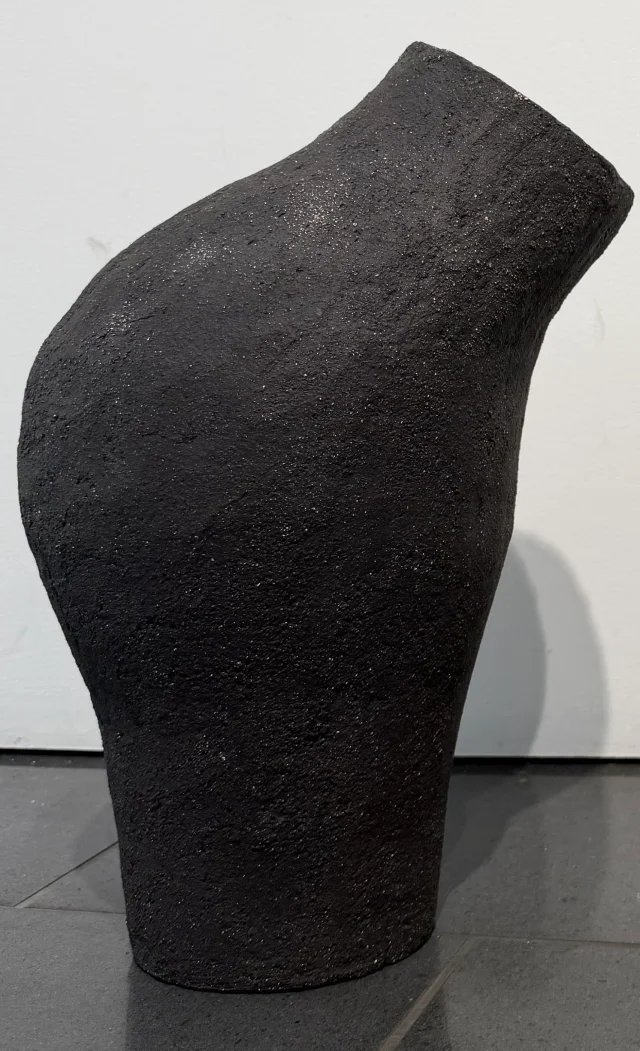
Linus Schuierer is a Munich-based artist who studied at the Academy of Fine Arts in Munich. His practice includes work with textile materials, from which he develops reduced, often folded objects – as in the series „Faltung“ (Fold). His work has been shown at the Kunstverein München, among others.
SCHÜTTE, Thomas
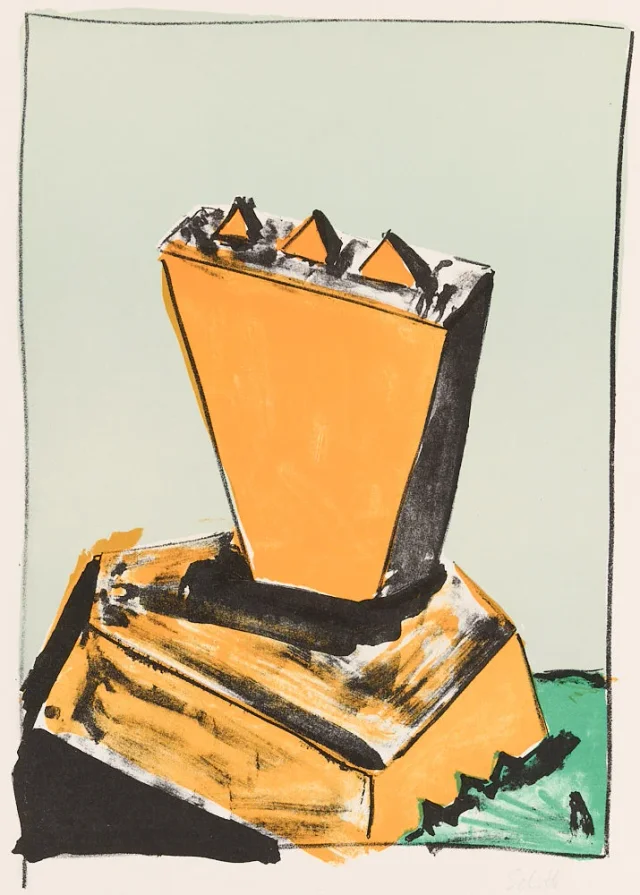
Thomas Schütte (b. 1954 in Oldenburg) is one of the most internationally renowned artists of the present. His wide-ranging work centres on sculpture but extends equally to installations, architectural models, watercolours and prints. Characteristic is his assured handling of the most varied materials — bronze, steel, ceramic and glass — with which he created haunting human figures such as the "Große Geister" (Great Spirits) and "United Enemies." Schütte studied at the Düsseldorf Art Academy under Gerhard Richter and Fritz Schwegler, among others, and has received numerous honours, including the Golden Lion at the 2005 Venice Biennale. His work is held in the world's most important museums and achieves top prices on the international market.
SOLAL, Anna
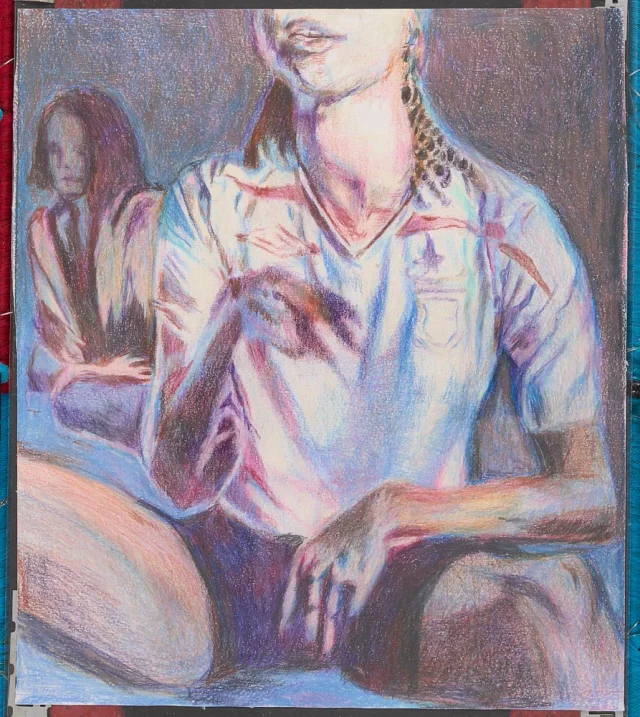
From combs, shards of mirrors, and mobile phone screens, Anna Solal (*1988 in Dreux, France) creates sculptures. She is known for her assemblages made from urban materials—mostly metal and plastic—which she collects on the streets or purchases in discount stores before reconfiguring them into new compositions.Solal studied sculpture at the École Nationale Supérieure des Arts Visuels de La Cambre in Brussels as well as Fine Art at Central Saint Martins in London. She lives and works in Paris and has been a resident at the Villa Medici in Rome since 2022. Her works have been exhibited at institutions including the Palais de Tokyo in Paris and the Musée des Abattoirs in Toulouse.
SPEIER, Anne
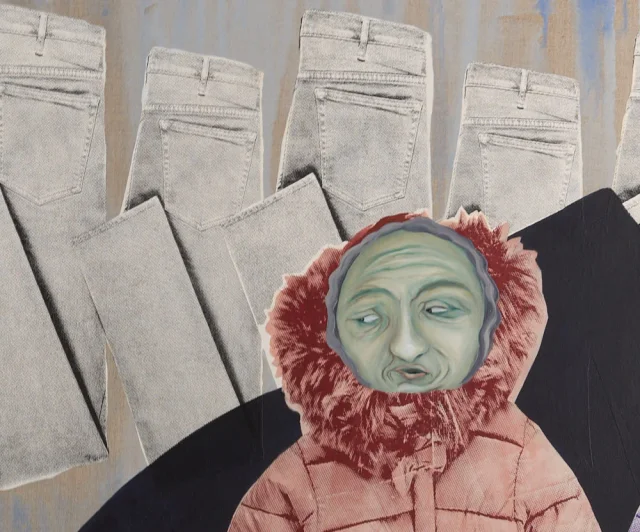
In her work Anne Speier (b. 1977 in Frankfurt am Main) brings together different, sometimes contradictory materials, styles and periods, drawing from that friction a distinctive, contemporary visual language. Her painting and sculpture combine innovative digital reproduction methods with classical, hand-made techniques. Speier studied at the Städelschule in Frankfurt am Main (2004–2008) and at the University of Applied Arts Vienna (1999–2004). She lives in Vienna, where she teaches object sculpture at the Academy of Fine Arts.
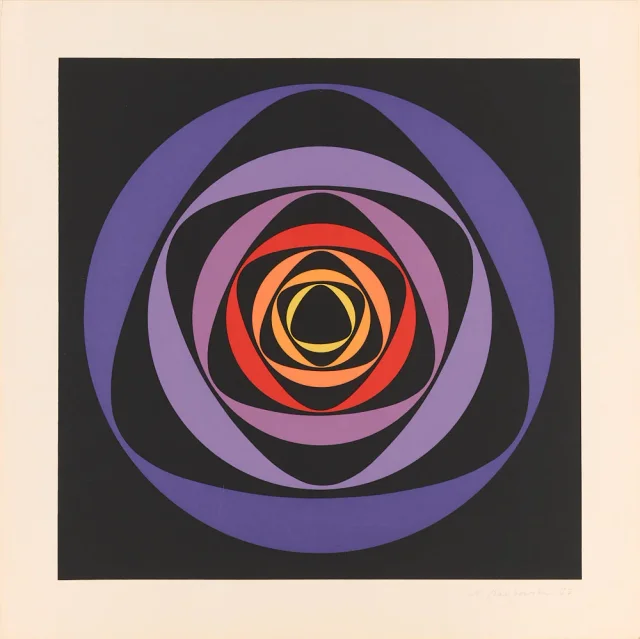
STANKOWSKI, Anton
The Deutsche Bank logo, the visual identity for the city of Berlin: Anton Stankowski (1906–1998) is regarded as one of the most important pioneers of constructive graphic art. Shaped by a clear, geometric formal language, he translated concepts and processes into reduced, precise pictorial signs — and deliberately drew no line between free and applied art. After training as a decorative painter and studying at the Folkwangschule in Essen, Stankowski settled in Stuttgart, which became his long-time base. In 1983 he established the Stankowski Foundation, which to this day honours artists who unite free and applied art. His work left a lasting mark on modern graphic design in Germany.
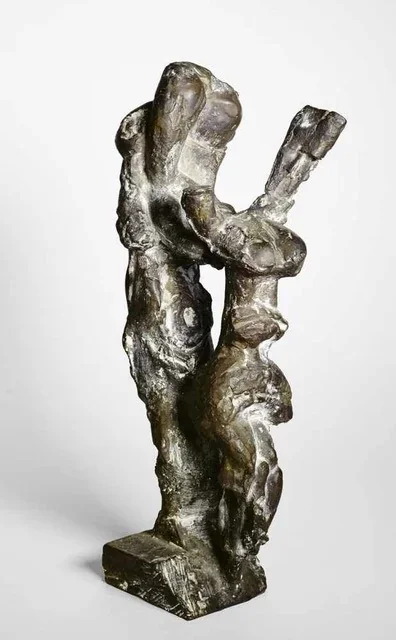
SZYMANSKI, Rolf
Rolf Szymanski (1928–2013) was a distinguished German sculptor, draftsman, and graphic artist and is considered one of the most important representatives of German postwar sculpture. He was born on June 22, 1928, in Leipzig and studied from 1947 to 1949 at the Berlin University of the Arts (then the Berlin University of Fine Arts). He received significant artistic impulses through his engagement with European Modernism as well as through his encounter with the sculptor Renée Sintenis.From the 1950s onward, Szymanski developed a distinctive artistic language in which figurative elements merge with surreal, organic, and symbolic forms. His sculptures are characterized by poetic imagery, subtle irony, and an exceptional sensitivity to material, surface, and space. They consistently explore themes of humanity, human existence, vulnerability, as well as mythological and literary subjects. His works move between figuration and abstraction, offering a wide range of possible interpretations.From 1974 to 1993, Szymanski was Professor of Sculpture at the Berlin University of the Arts. In addition, he became a member of the Akademie der Künste in 1970, where he contributed to artistic dialogue and the promotion of contemporary art. The Academy recognized him as a formative figure in 20th-century German sculpture.Szymanski exhibited his works in numerous national and international exhibitions, including several editions of documenta in Kassel. Today, his sculptures can be found in major museums, public collections, and sculpture parks in Germany and abroad.
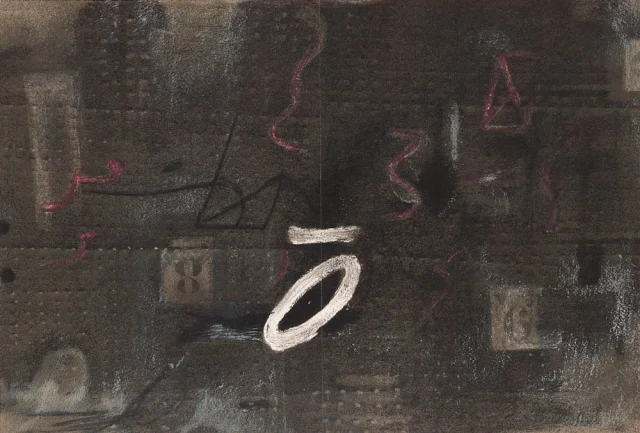
TÀPIES, Antoni
Antoni Tàpies (1923–2012) was a Catalan painter, sculptor, and art theorist, and is regarded as one of the most important European artists of the post-war era. After surrealist beginnings, he turned to abstract art in the early 1950s and became a leading exponent of Art Informel and matter painting. His work is characterized by the so-called pintura matèrica, in which he mixed marble dust, sand, and clay with paint and incorporated everyday objects such as string, paper, and cloth into his pictures.In 1948, in Barcelona, Tàpies was among the co-founders of the avant-garde group Dau al Set, which was closely tied to Surrealism. His works combine an archaic, material visual language with symbolic signs, crosses, and letters, and often carry a political dimension shaped by his Catalan identity. In 1984 he established the Fundació Antoni Tàpies in Barcelona, dedicated to his work and life. He remains one of the most influential Spanish artists of the twentieth century, and works by Tàpies are represented in major museums worldwide and rank among the most sought-after and value-stable positions in post-war European art for collectors.
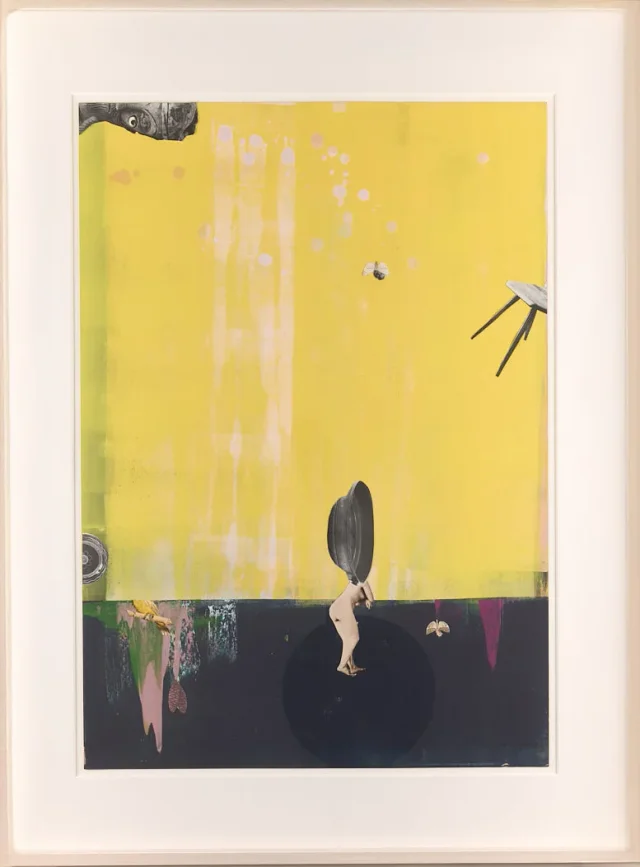
TOBIAS, Gert & Uwe
Gert and Uwe Tobias (b. 1973 in Kronstadt, Romania) have worked as an artistic duo since the late 1990s. The twin brothers became known above all for their large-format, colour-intense woodcuts, made in a characteristic, puzzle-like technique. In them they combine motifs of Transylvanian folk art and folklore with elements of classical modernism, Dadaism and pop culture into an unmistakable, often slyly humorous visual language. Beyond the woodcuts, their output includes collages, ceramics and the celebrated "typewriter drawings." After moving to Germany they studied in Mainz and at the Braunschweig University of Art under Walter Dahn; their work has been shown internationally, including at the Museum of Modern Art in New York and the Whitechapel Gallery in London.
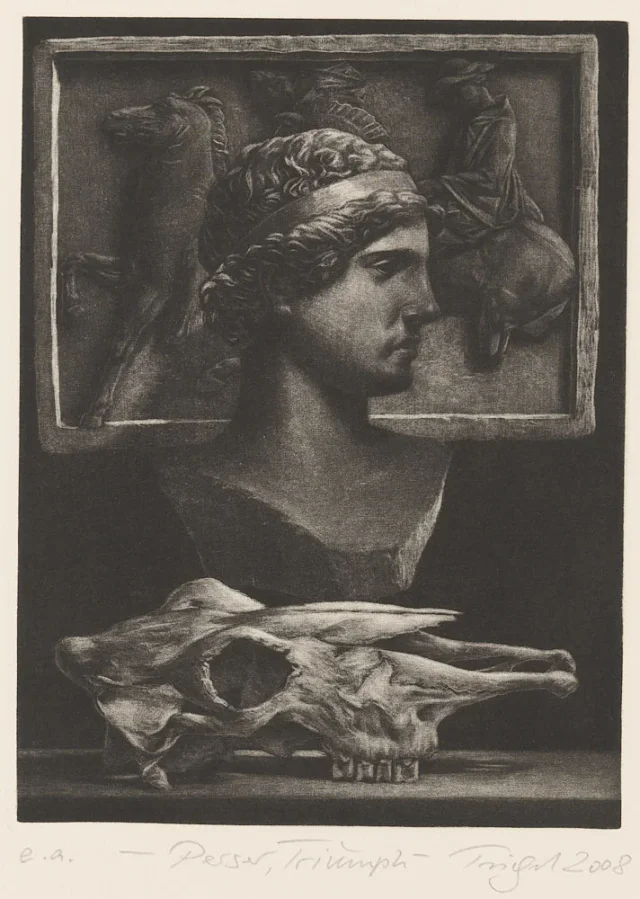
TRIEGEL, Michael
Faith, myth and human existence are the themes Michael Triegel (b. 1968 in Erfurt) negotiates in precisely painted, often enigmatic and allegorical compositions. His art is distinguished by a masterful revival of old-masterly painting techniques, which he combines with inspirations from the Renaissance, Mannerism and the Baroque. Triegel studied at the Academy of Fine Arts (HGB) in Leipzig under Arno Rink and Ulrich Hachulla and thus stands in the tradition of the Leipzig School. He gained international renown not least through the official portrait of Pope Benedict XVI and the Naumburger Altar; the newspaper Die Zeit called him "Germany's most famous religious artist." His work is held in significant collections and churches and is represented by Galerie Schwind, among others.
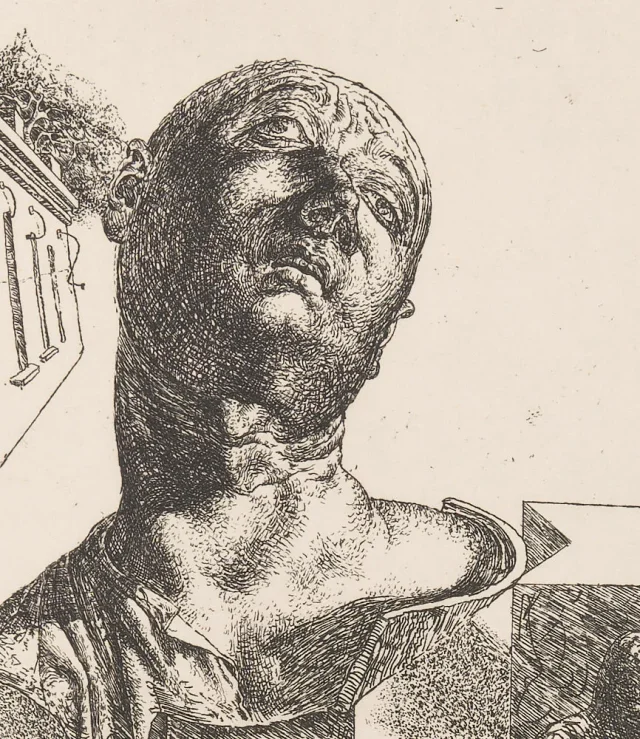
TÜBKE, Werner
Werner Tübke (1929–2004), alongside Bernhard Heisig and Wolfgang Mattheuer, is one of the founders of the Leipzig School. His unmistakable old-masterly style draws on the tradition of the Renaissance and Mannerism, setting him clearly apart from the currents of the avant-garde. Tübke's work is defined by multi-figure allegorical and historical compositions executed with the utmost painterly precision. His magnum opus, the monumental Peasants' War Panorama in Bad Frankenhausen, measures roughly 14 by 123 metres — one of the largest paintings in the world, often called the "Sistine Chapel of the North." After an apprenticeship as a painter he studied at the Academy of Fine Arts in Leipzig, where he later taught as a professor; he was one of the few East German artists to win broad recognition in the West as well.
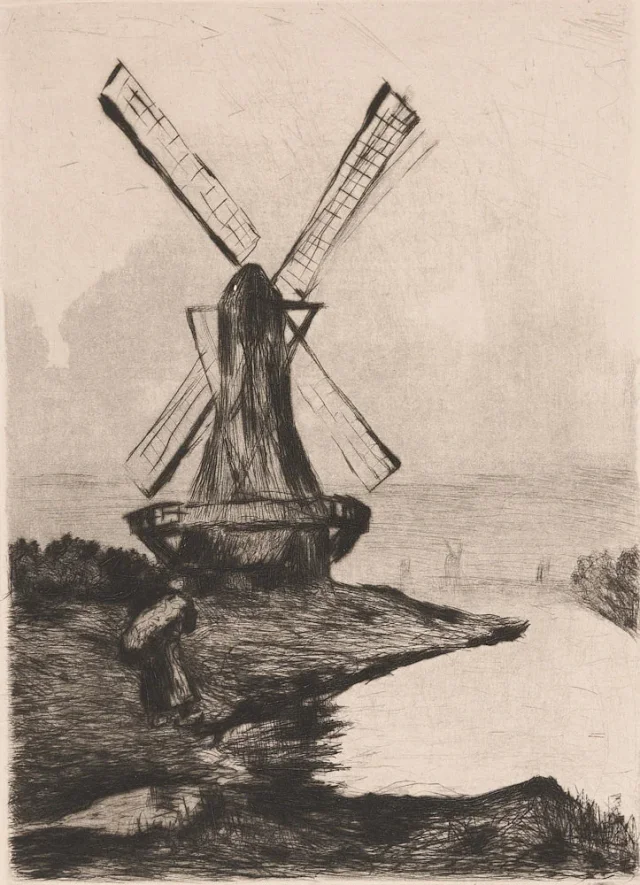
URY, Lesser
Nocturnal café scenes, rain-soaked boulevards gleaming in the glow of gas lamps: Lesser Ury (1861–1931) became famous above all for his atmospheric city views. A virtuoso master of both pastel and oil, he captured light, air and mood with incomparable sensitivity, and ranks among the foremost representatives of German Impressionism. After studying at the Düsseldorf academy and spending time in Brussels, Paris and Munich, he settled in Berlin, where his early champion Adolph Menzel took notice of his talent. Ury was a member of the Munich and Berlin Secessions and, together with Max Liebermann, shaped the image of modern metropolitan painting. His work is held today in important museums and is much sought after on the art market.
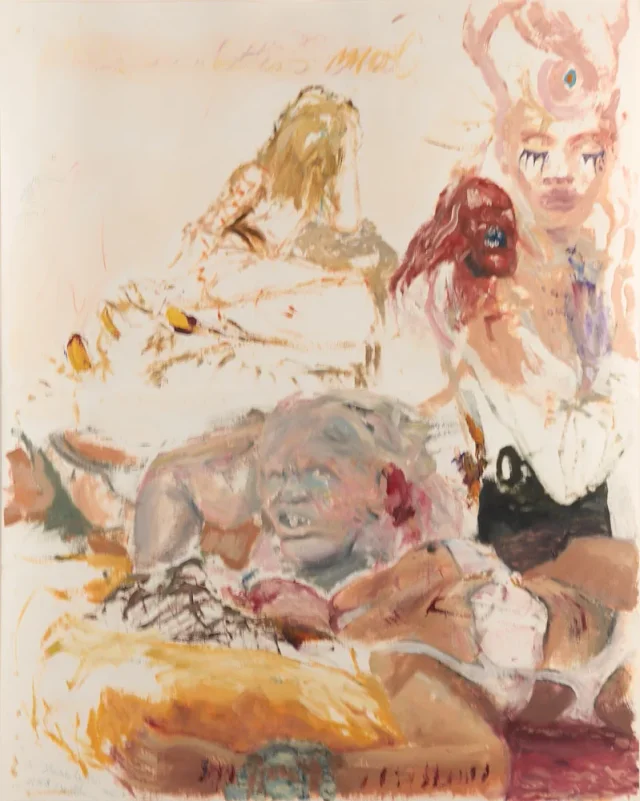
VOLKMANN, Herbert
The life of Herbert Volkmann (1954–2014) followed an unusual path: after studying art under Hermann Bachmann at the College of Fine Arts in West Berlin, he first worked in his father's fruit business and became a successful fruit wholesaler before returning to painting — encouraged by Jonathan Meese. His pictures, inspired by Francis Bacon, combine magazine cuttings and photographs with oil paint in a collage-like manner. Volkmann, who early on collected works by Daniel Richter, Franz Ackermann, Peter Doig and the Young British Artists, lived and worked in Berlin.
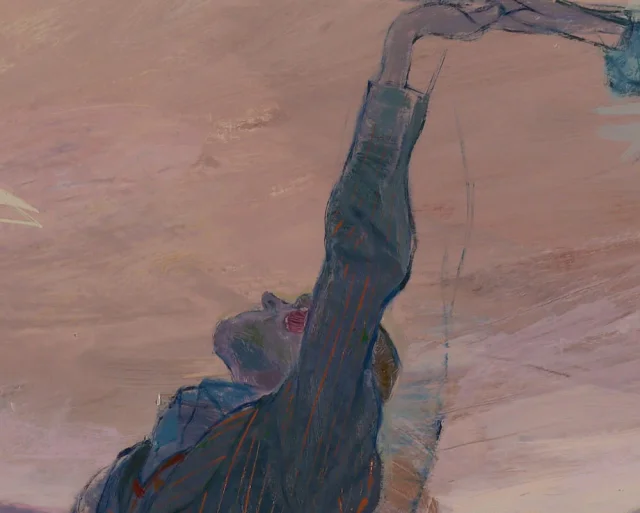
VON KAUFMANN, Ruprecht
Ruprecht von Kaufmann (b. 1974 in Munich) paints mainly in oil on linoleum — a material into which he simultaneously cuts with a lino knife. His pictures show figures, interiors and landscapes in often surreally charged, narrative settings. Von Kaufmann studied illustration at the Art Center College of Design in Los Angeles and lived for several years in Los Angeles and New York before settling in Berlin in 2003. He gained international recognition for his figurative work; pieces by him are held in the collection of the German Bundestag, as well as in numerous international private collections.
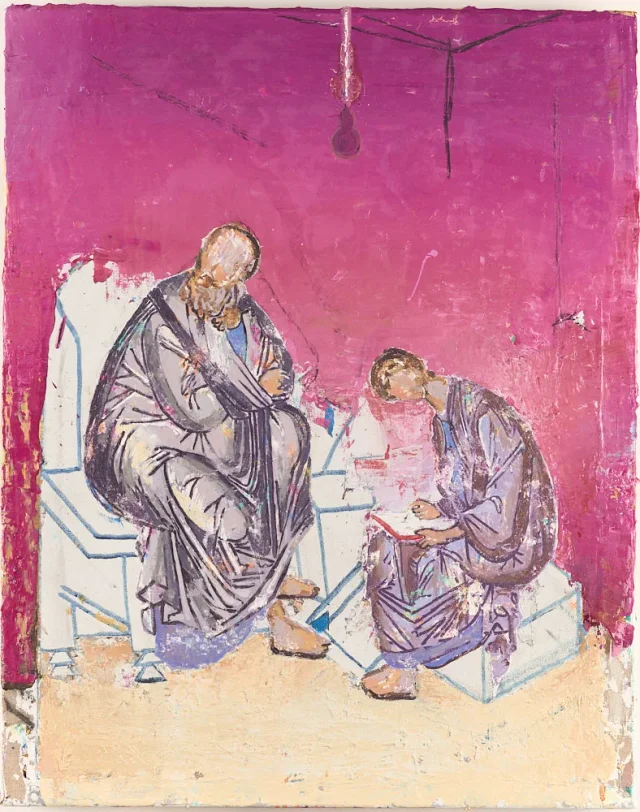
WEISCHER, Matthias
Unpeopled, stage-like interiors define the work of Matthias Weischer (b. 1973 in Elte): art-historical allusions, estranged everyday objects and enigmatic spatial perspectives combine into layered pictorial spaces. Characteristic is his rich, often relief-like application of paint, which lends his works a distinctive haptic presence. Weischer studied at the Academy of Fine Arts (HGB) in Leipzig and was a master student of Sighard Gille; together with artists such as Neo Rauch, Tim Eitel and David Schnell, he shaped the international success of Leipzig painting from the 2000s onward. His work is held in major museums and collections worldwide.
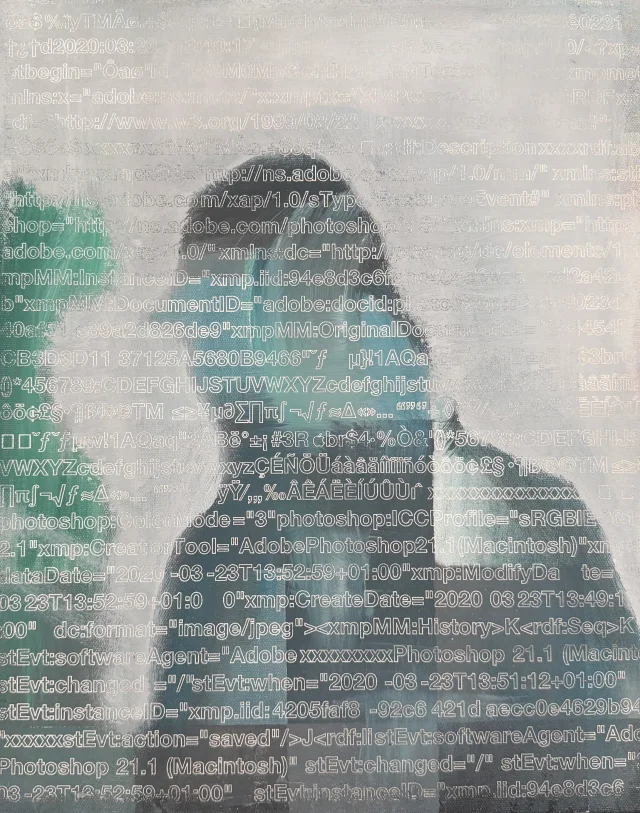
WOHNSEIFER, Johannes
Johannes Wohnseifer (b. 1967 in Cologne) moves assuredly between media: video, photography, sculpture, installation and acrylic painting all belong to his work. Shaped by Minimalism and Pop Art, he combines Pop's fascination with commercial imagery and Minimalism's critique of mass consumption. Since 2007 Wohnseifer has been professor of painting and sculpture at the Academy of Media Arts Cologne. Solo exhibitions have taken him to the Museum Ludwig in Cologne (1999), the Sprengel Museum Hannover (2003) and the Hara Museum of Contemporary Art in Tokyo (2005); in 2001 he received the ars viva prize. He lives and works in Cologne and Erftstadt.
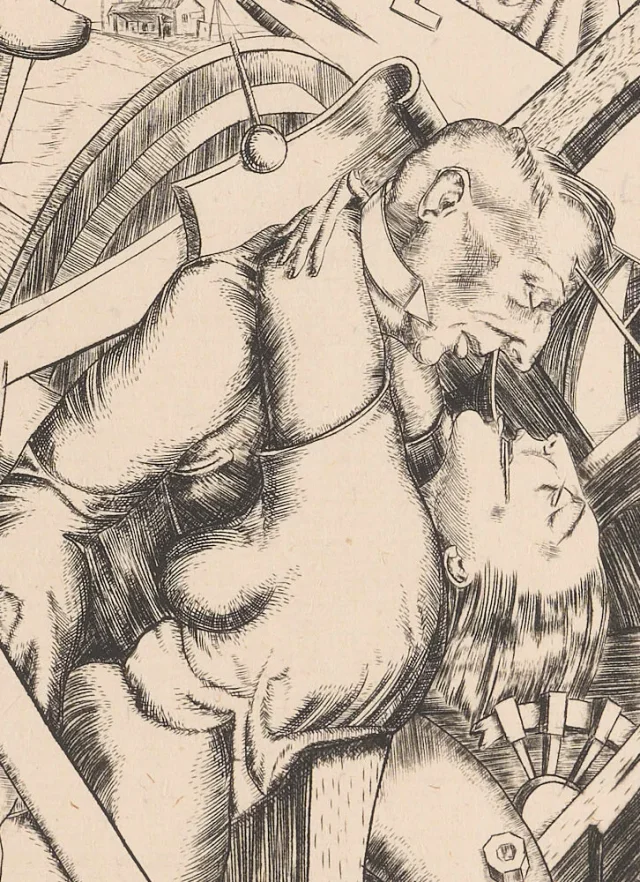
WÜSTEN, Johannes
Johannes Wüsten (1896–1943) was a significant figure of the New Objectivity. Initially shaped by Expressionism, he arrived — after training under Otto Modersohn in Worpswede and years in Hamburg — at a precise, socially critical visual language; from 1929 he devoted himself above all to copper engraving, which he brought to masterly perfection. Wüsten was a committed anti-fascist and belonged to a resistance group in Görlitz; in 1934 he was forced into exile in Prague and Paris, where he worked as a writer and illustrator for anti-fascist magazines. In 1943 he died as a political prisoner in the Brandenburg-Görden penitentiary. His comparatively small but technically outstanding body of work unites artistic quality with profound historical significance.
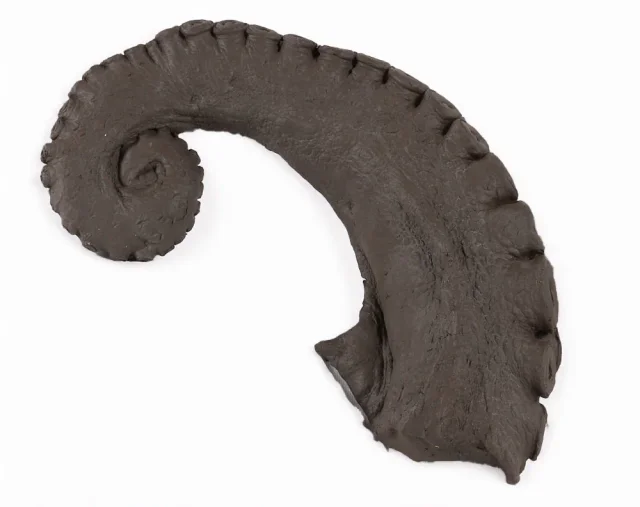
ZINK YI, David
David Zink Yi (*1973 in Lima) is an artist of Peruvian, Chinese, and German heritage who lives and works in Berlin. His own biography serves as an important point of departure for his artistic practice. In his multifaceted body of work, he explores the body as a site of identity, memory, and transformation. Working across sculpture, video, ceramics, sound, and performance, he develops an open, interdisciplinary practice that transcends the boundaries of individual media.Zink Yi is particularly renowned for his ceramic sculptures of cephalopods—octopuses and squid—whose mutable, fluid physicality he translates into clay. In 2013, he participated in the Venice Biennale, and in 2019 his work was presented at the Belvedere in Vienna. Today, his works are held in numerous major international collections, including the Museum of Modern Art in New York, Tate in London, the Museum of Contemporary Art in Los Angeles, and Museum Ludwig in Cologne.
